
- Investigator
- Thomas J George
- Status
- Accepting Candidates
Pancreatic cancer
Definition
Pancreatic cancer is cancer that starts in the pancreas.
Alternative Names
Pancreatic cancer; Cancer - pancreas
Causes
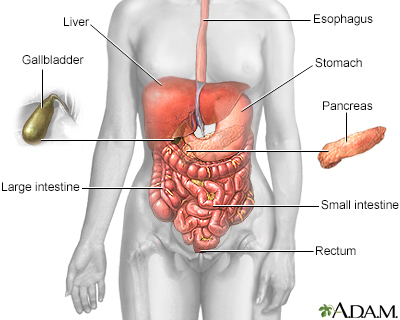
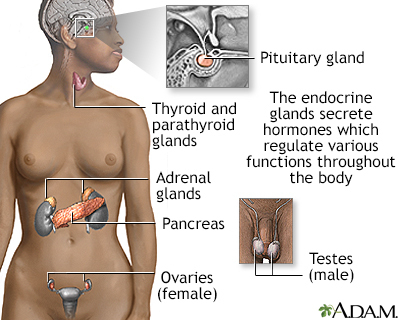
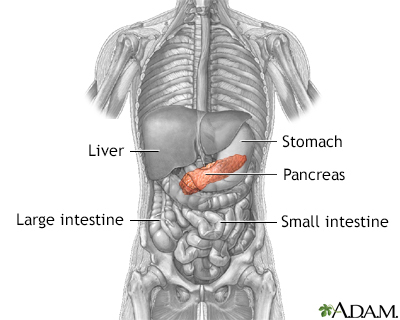
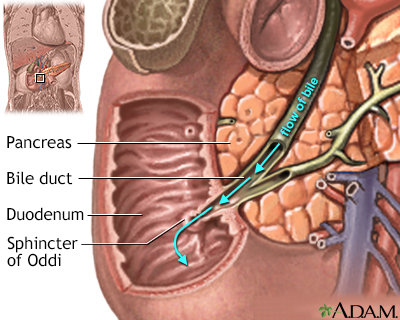
The pancreas is a large organ behind the stomach. It makes and releases enzymes into the intestines that help the body digest and absorb food, especially fats. The pancreas also makes and releases insulin and glucagon. These are hormones that help the body control blood sugar levels.
There are different types of pancreatic cancers. The type depends on the cell the cancer develops in. Examples include:
- Adenocarcinoma, the most common type of pancreatic cancer
- Other more rare types include glucagonoma, insulinoma, islet cell tumor, VIPoma
The exact cause of pancreatic cancer is unknown. It is more common in people who:
- Are obese
- Have a diet high in fat and low in fruits and vegetables
- Have diabetes
- Have long-term exposure to certain chemicals
- Have long-term inflammation of the pancreas (chronic pancreatitis)
- Smoke
The risk for pancreatic cancer increases with age. Family history of the disease also slightly increases the chance of developing this cancer.
Symptoms
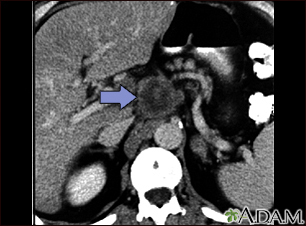
A tumor (cancer) in the pancreas may grow without any symptoms at first. This means the cancer is often advanced when it is first found.
Symptoms of pancreatic cancer include:
- Diarrhea
- Dark urine and clay-colored stools
- Fatigue and weakness
- Sudden increase in blood sugar level (diabetes)
- Jaundice (a yellow color in the skin, mucous membranes, or white part of the eyes) and itching of the skin
- Loss of appetite and weight loss
- Nausea and vomiting
- Pain or discomfort in the upper part of the belly or abdomen
Exams and Tests
The health care provider will perform a physical exam and ask about your symptoms. During the exam, the provider may feel a lump (mass) in your abdomen.
Blood tests that may be ordered include:
- Complete blood count (CBC)
- Liver function tests
- Serum bilirubin
Imaging tests that may be ordered include:
- CT scan of the abdomen
- Endoscopic retrograde cholangiopancreatography (ERCP)
- Endoscopic ultrasound
- MRI of the abdomen
Diagnosis of pancreatic cancer (and what type) is made by a pancreatic biopsy.
If tests confirm you have pancreatic cancer, more tests will be done to see how far the cancer has spread within and outside the pancreas. This is called staging. Staging helps guide treatment and gives you an idea of what to expect.
Treatment
Treatment for adenocarcinoma depends on the stage of the tumor.
Surgery may be done if the tumor has not spread or has spread very little. Along with surgery, chemotherapy or radiation therapy or both may be used before or after surgery. A small number of people can be cured with this treatment approach.
When the tumor has not spread out of the pancreas but cannot be surgically removed, chemotherapy and radiation therapy together may be recommended.
When the tumor has spread (metastasized) to other organs such as the liver, chemotherapy alone is usually used.
With advanced cancer, the goal of treatment is to manage pain and other symptoms. For example, if the tube that carries bile is blocked by the pancreatic tumor, a procedure to place a tiny metal tube (stent) may be done to open the blockage. This can help relieve jaundice, and itching of the skin.
Support Groups
You can ease the stress of illness by joining a cancer support group. Sharing with others who have common experiences and problems can help you not feel alone.
Outlook (Prognosis)
Some people with pancreatic cancer that can be surgically removed are cured. But in most people, the tumor has spread and cannot be completely removed at the time of diagnosis.
Chemotherapy and radiation are often given after surgery to increase the cure rate (this is called adjuvant therapy). For pancreatic cancer that cannot be removed completely with surgery or cancer that has spread beyond the pancreas, a cure is not possible. In this case, chemotherapy is given to improve and extend the person's life.
When to Contact a Medical Professional
Contact your provider for an appointment if you have:
- Abdominal or back pain that does not go away
- Persistent loss of appetite
- Unexplained fatigue or weight loss
- Other symptoms of this disorder
Prevention
Preventive measures include:
- If you smoke, now is the time to quit.
- Eat a diet high in fruits, vegetables, and whole grains.
- Exercise regularly to stay at a healthy weight.
Gallery
References
De Jesus-Acosta A, Narang A, Mauro L, Herman J, Jaffee EM, Laheru DA. Carcinoma of the pancreas. In: Niederhuber JE, Armitage JO, Kastan MB, Doroshow JH, Tepper JE, eds. Abeloff's Clinical Oncology. 6th ed. Philadelphia, PA: Elsevier; 2020:chap 78.
Modi B, Shires GT. Pancreatic cancer, cystic pancreatic neoplasms, and other nonendocrine pancreatic tumors. In: Feldman M, Friedman LS, Brandt LJ, eds. Sleisenger and Fordtran's Gastrointestinal and Liver Disease. 11th ed. Philadelphia, PA: Elsevier; 2021:chap 60.
National Cancer Institute website. Pancreatic cancer treatment (PDQ) - health professional version. www.cancer.gov/types/pancreatic/hp/pancreatic-treatment-pdq. Updated March 17, 202. Accessed May 18, 2022.
National Comprehensive Cancer Network website. NCCN clinical practice guidelines in oncology: pancreatic adenocarcinoma. Version 2.2021. www.nccn.org/professionals/physician_gls/pdf/pancreatic.pdf. Updated February 24, 2022. Accessed May 18, 2022.
Related specialties
Clinical Trials: Pancreatic cancer
UF Health research scientists make medicine better every day. They discover new ways to help people by running clinical trials. When you join a clinical trial, you can get advanced medical care. Sometimes years before it's available everywhere. You can also help make medicine better for everyone else. If you'd like to learn more about clinical trials, visit our clinical trials page. Or click one of the links below:
This phase II trial studies the effect of capecitabine and temozolomide after surgery in treating patients with high-risk well-differentiated pancreatic neuroendocrine tumors. Chemotherapy drugs, such as capecitabine and temozolomide, work in…
- Investigator
- Brian H Ramnaraign
- Status
- Accepting Candidates
- Ages
- 18 Years - N/A
- Sexes
- All
The prognosis for patients with localized pancreatic adenocarcinoma who are not surgical candidates is poor. Patients characterized as having "borderline resectable" disease treated with preoperative chemo-radiotherapy fair somewhat better *…
- Investigator
- Romaine C Nichols
- Status
- Accepting Candidates
- Ages
- 18 Years - N/A
- Sexes
- All
Community and Patient Programs: Pancreatic cancer
Our community and patient programs provide great value to patients, families and loved ones. People can find support, educational materials, expert consultants and more. In most instances, these programs are offered free of charge.
-
Adult Cancer Survivorship Program
Improves health and quality of life for long-term cancer survivors.
-
Arts in Medicine Integrative Therapies
Provides supportive care for select adult and pediatric patients through meditation, relaxation, yoga, tai chi, qigong and massage therapy sessions.
-
Cancer Connections
An educational and networking event that brings together cancer patients, survivors, caregivers and health care professionals.
-
Criser Cancer Resource Center
Interdisciplinary facility that helps support the diverse needs of individuals and families.
-
Pain Management - Cancer
Pain management treatment plans for cancer patients.
-
Project CONTINUITY
Helps individuals access high-quality cancer screening, prevention and treatment services.
-
Social Workers for Cancer Patients
Can assist you through the treatment process in a number of practical and supportive ways.
-
Streetlight
Peer companionship for adolescents and young adults living with serious illness.
-
UF Health Wellness University
Offers classes, programs, groups, activities, resources and health fairs throughout Gainesville, Ocala and The Villages communities.
News and Patient Stories: Pancreatic cancer
UF Health oncologist receives clinical investigator leadership award
December 14, 2023
A University of Florida Health cancer researcher has received a competitive three-year award from a leading national foundation to support her leadership…
UF Health Cancer Center, +2 more

UF researchers develop new CRISPR-based tool for cancer diagnosis
April 27, 2023
A team of University of Florida researchers has developed a promising new CRISPR-powered method for noninvasive blood tests that could help clinicians diagnose…
College of Medicine, UF Health Cancer Center, +2 more

Latest podcast episodes
Targeting pancreatic cancer with radiotherapy
Worldwide cancer survival rates have been improving for the last 40 years, but some types, like pancreatic cancer, lag behind. More than 56,000 people in the United States will be diagnosed with...
Surgical hope for pancreatic cancer patients
The diagnosis of cancer can be tough to process. But when diagnosed with pancreatic cancer, a disease commonly known to have low survival rates, patients find it hard to hold on to hope. Cancer...
Talking about the incurable disease of pancreatic cancer
The disease that has afflicted celebrities Alex Trebek, Aretha Franklin and Steve Jobs has been discussed frequently in recent years: pancreatic cancer. This deadly cancer occurs in the pancreas,...