Aortic Arch Syndrome
Definition
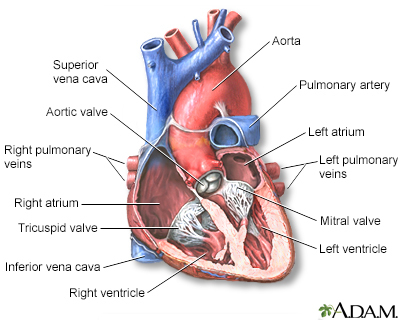
The aortic arch is the top part of the main artery carrying blood away from the heart. Aortic arch syndrome refers to a group of signs and symptoms associated with structural problems in the arteries that branch off the aortic arch.
Alternative Names
Subclavian artery occlusive syndrome; Carotid artery occlusion syndrome; Subclavian steal syndrome; Vertebral-basilar artery occlusive syndrome; Takayasu disease; Pulseless disease
Causes
Aortic arch syndrome problems can be due to trauma, blood clots, or malformations that develop before birth. These defects result in abnormal blood flow to the head, neck, or arms.
In children, there are many types of aortic arch syndromes, including:
- Congenital absence of a branch of the aorta
- Isolation of the subclavian arteries
- Vascular rings
An inflammatory disease called Takayasu syndrome may result in narrowing (stenosis) of the vessels of the aortic arch. This typically occurs in women and girls. This disease is seen more often in people of Asian descent.

Symptoms
Symptoms vary according to which artery or other structure that has been affected. Symptoms may include:
- Blood pressure changes
- Breathing problems
- Dizziness, blurred vision, weakness, and other brain and nervous system (neurological) changes
- Numbness of an arm
- Reduced pulse
- Swallowing problems
- Transient ischemic attacks (TIA)
Treatment
Surgery is often needed to treat the underlying cause of aortic arch syndrome.
Gallery
References
Beckman JA. Diseases of the aorta. In: Goldman L, Cooney KA, eds. Goldman-Cecil Medicine. 27th ed. Philadelphia, PA: Elsevier; 2024:chap 63.
Braverman AC, Schermerhorn M. Diseases of the aorta. In: Bonow RO, Mann DL, Tomaselli GF, et al, eds. Braunwald's Heart Disease: A Textbook of Cardiovascular Medicine. 13th ed. Philadelphia, PA: Elsevier; 2026:chap 39.
James WD. Cutaneous vascular diseases. In: James WD, ed. Andrews' Diseases of the Skin: Clinical Dermatology. 14th ed. Philadelphia, PA: Elsevier; 2026:chap 30.
Langford CA. Takayasu arteritis. In: Hochberg MC, Gravallese EM, Smolen JS, van der Heijde D, Weinblatt ME, Weisman MH, eds. Rheumatology. 8th ed. Philadelphia, PA: Elsevier; 2023:chap 165.