At the UF Health Women's Center, we provide comprehensive care for women with a variety of vulvar diseases including recurrent yeast infections and other vaginal infections, vulvar pain, precancer of the vulva and other benign conditions of the vulva. Our clinic and providers are dedicated to the care of women with benign conditions of the vulva. We work closely with our Department of Pathology to establish a correct diagnosis and then offer an array of treatment options including topical medical therapy, systemic medical therapy, physical therapy, and, when indicated, surgical therapy.
Definition
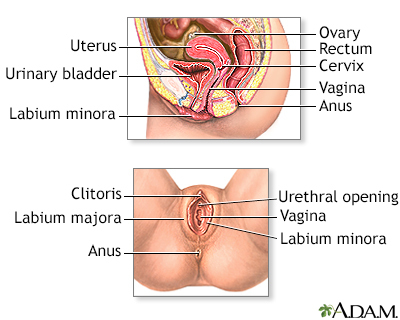
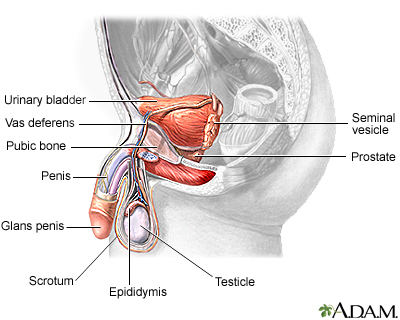
Genital warts are soft growths on the skin and mucous membranes of the genitals. They may be found on the penis, vulva, urethra, vagina, cervix, and around and in the anus.
Genital warts are spread through sexual contact.
HPV and Genital Warts Quiz
Quiz complete!
Thank you for taking the quiz. We hope it has been helpful in learning more about Genital Warts. If you have further questions, please contact or schedule an appointment with your primary care provider.
The virus that causes genital warts is called human papillomavirus (HPV). HPV infection is the most common sexually transmitted infection (STI). There are more than 180 types of HPV. Many cause no problems. Some cause warts on other parts of the body and not the genitals. Types 6 and 11 are most commonly linked to genital warts.
Certain other types of HPV can lead to precancerous changes in the cervix, or to cervical cancer. These are called high-risk types of HPV. They can also lead to vaginal or vulvar cancer, anal cancer, and throat or mouth cancer.
Patient Education Video:Cervical cancer
Important facts about HPV:
HPV infection spreads from one person to another through sexual contact involving the anus, mouth, or vagina. The virus can be spread, even if you do not see the warts.
You may not see warts for 6 weeks to 6 months after becoming infected. You may not notice them for years.
Not everyone who has come into contact with the HPV virus and genital warts will develop them.
You are more likely to get genital warts and spread them more quickly if you:
Have multiple sexual partners
Are sexually active at an early age
Use tobacco or alcohol
Have a viral infection, such as herpes, and are stressed at the same time
Are pregnant
Have a weakened immune system due to a condition such as diabetes, HIV/AIDS, or from medicines
If a child has genital warts, sexual abuse should be suspected as a possible cause.
Symptoms
Genital warts can be so tiny, you cannot see them.
The warts can look like:
Flesh-colored spots that are raised or flat
Growths that look like the top of a cauliflower
In females, genital warts can be found:
Inside the vagina or anus
Outside the vagina or anus, or on nearby skin
On the cervix inside the body
In males, genital warts can be found on the:
Penis
Scrotum
Groin area
Thighs
Inside or around the anus
HPV can also cause warts on the:
Lips
Mouth
Tongue
Throat
Other symptoms are rare, but can include:
Increased dampness in the genital area near the warts
Your health care provider will perform a physical exam. In women, this includes a pelvic exam.
An office procedure called colposcopy is used to spot warts that cannot be seen with the naked eye. It uses a light and a low-power microscope to help your provider find and then take samples (biopsy) of abnormal areas in your cervix. Colposcopy is usually done in response to an abnormal Pap test.
HPV can cause abnormal results on a Pap test. If you have these types of changes, you may need more frequent Pap tests or a colposcopy.
An HPV DNA test can tell if you have a high-risk type of HPV known to cause cervical cancer. This test may be done:
If you have genital warts
As a screening test for cervical cancer women age 30 or older
In women of any age who have a slightly abnormal Pap test result
Make sure you are screened for cervical, vaginal, vulvar, or anal cancer if you have been diagnosed with genital warts.
Treatment
Genital warts must be treated by a provider. Do not use over-the-counter medicines meant for other kinds of warts.
Treatment may include:
Medicines applied to the genital warts or injected by your provider
Prescription medicine that you apply at home several times a week
The warts may also be removed with minor procedures, including:
If you have genital warts, all of your sexual partners should be examined by a provider and treated if warts are found. Even if you do not have symptoms, you should be treated. This is to prevent complications and avoid spreading the condition to others.
You will need to return to your provider after treatment to make sure all the warts are gone.
Routine Pap tests are recommended if you are a woman who has had genital warts, or if your partner had them. If you had warts on your cervix, you may need to have Pap tests every 3 to 6 months for a time after the first treatment.
Women with precancerous changes caused by HPV infection may need further treatment.
Outlook (Prognosis)
Many sexually active young women become infected with HPV. In many cases, HPV goes away on its own.
Most men who become infected with HPV never develop any symptoms or problems from the infection. However, they can still pass it on to current and sometimes future sexual partners. Men are at increased risk for cancer of the penis, anus, and throat if they have a history of HPV infection.
Even after you have been treated for genital warts, you may still infect others.
Possible Complications
Some types of HPV can cause cancer of the cervix and vulva. They are the main cause of cervical cancer.
Genital warts may become numerous and quite large. These will need further treatment.
When to Contact a Medical Professional
Contact your provider if:
A current or past sexual partner has genital warts.
You have visible warts on your external genitals, itching, discharge, or abnormal vaginal bleeding. Keep in mind that genital warts may not appear for months to years after having sexual contact with an infected person.
You think a young child might have genital warts.
Women should begin having Pap tests at age 21 or as recommended by their provider.
Prevention
HPV can be passed from person to person even when there are no visible warts or other symptoms. Practicing safer sex can help reduce your risk for getting HPV and cervical cancer:
Always use male and female condoms. But be aware that condoms cannot fully protect you. This is because the virus or warts can also be on the nearby skin.
Have only one sexual partner, who you know is infection-free.
Limit the number of sexual partners you have over time.
Avoid partners who take part in high-risk sexual activities.
Bonnez W. Papillomaviruses. In: Bennett JE, Dolin R, Blaser MJ, eds. Mandell, Douglas, and Bennett's Principles and Practice of Infectious Diseases. 9th ed. Philadelphia, PA: Elsevier; 2020:chap 143.
Centers for Disease Control and Prevention website. Human papillomavirus (HPV). HPV vaccination. www.cdc.gov/hpv/vaccines/. Updated August 20, 2024. Accessed November 12, 2024.
James WD, Elston DM, Treat JR, Rosenbach MA, Neuhaus IM. Viral diseases. In: James WD, Elston DM, Treat JR, Rosenbach MA, Neuhaus IM, eds. Andrews' Diseases of the Skin: Clinical Dermatology. 13th ed. Philadelphia, PA: Elsevier; 2020:chap 19.
Last reviewed October 15, 2024 by John D. Jacobson, MD, Professor Emeritus, Department of Obstetrics and Gynecology, Loma Linda University School of Medicine, Loma Linda, CA. Also reviewed by David C. Dugdale, MD, Medical Director, Brenda Conaway, Editorial Director, and the A.D.A.M. Editorial team..
This year, the University of Florida Health Cancer Center is recognizing March 4, International HPV Awareness Day, by equipping you with the information you…