Health Screenings for Women Ages 40 to 64
Definition
You should visit your health care provider from time to time, even if you are healthy. The purpose of these visits is to:
- Screen for medical issues
- Assess your risk for future medical problems
- Encourage a healthy lifestyle
- Update vaccinations and other preventive care services
- Help you get to know your provider in case of an illness
Alternative Names
Health maintenance visit - women - ages 40 to 64; Physical exam - women - ages 40 to 64; Yearly exam - women - ages 40 to 64; Checkup - women - ages 40 to 64; Women's health - ages 40 to 64; Preventive care - women - ages 40 to 64
Information
Even if you feel fine, you should still see your provider for regular checkups. These visits can help you avoid problems in the future. For example, the only way to find out if you have high blood pressure is to have it checked regularly. High blood sugar and high cholesterol levels also may not have any symptoms in the early stages. A simple blood test can check for these conditions.
There are specific times when you should see your provider or receive specific health screenings. The US Preventive Services Task Force (USPSTF) publishes a list of recommended screenings that are updated as needed. Below are screening guidelines for women ages 40 to 64.
BLOOD PRESSURE SCREENING
Have your blood pressure checked at least once every year. Watch for blood pressure screenings in your area. Ask your provider if you can stop in to have your blood pressure checked. You can also check your blood pressure using the automated machines that are often located at local grocery stores and pharmacies.
Ask your provider if you need your blood pressure checked more often if:
- You have diabetes, heart disease, kidney problems, are overweight or have obesity, or have certain other health conditions
- You have a first-degree relative with high blood pressure
- You are Black
- Your blood pressure top number is from 120 to 129 mm Hg, or the bottom number is from 70 to 79 mm Hg
- You had high blood pressure during a pregnancy
If the top number is 130 mm Hg or greater, but lower than 140 mm Hg, or the bottom number is 80 mm Hg or greater, but lower than 90 mm Hg, this is considered to be stage 1 hypertension. Readings above these are considered to be stage 2 hypertension. Schedule an appointment with your provider to learn how you can reduce your blood pressure. Record your blood pressure numbers and bring this information to share with your provider.
BREAST CANCER SCREENING
Experts do not agree about the benefits of breast self-exams in finding breast cancer or saving lives. Talk to your provider about what is best for you.
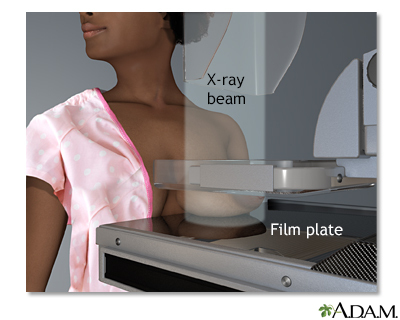
Mammography is performed to screen women to detect early breast cancer when it is more likely to be cured. The recommendations of different expert organizations can differ. Recommendations are:
- Mammography is generally recommended for all women starting at age 40, repeated every 1 to 2 years.
- Women with a family history of breast cancer should work with their health care provider to assess their risk of breast cancer. In some situations, additional testing may be considered.
Mammograms work best at finding breast cancer in women ages 40 to 74. It is not clear how well mammograms work at finding cancer in women age 75 and older.
If you have other risk factors for breast cancer, your provider may recommend an MRI scan for screening.
CERVICAL CANCER SCREENING
After starting cervical cancer screening:
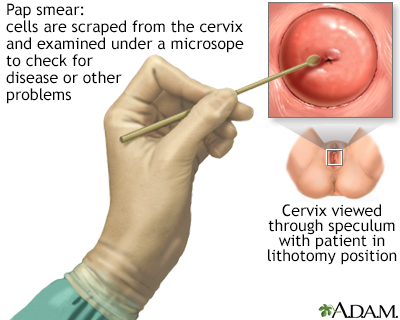
- Women ages 30 through 65 should be screened with either a Pap test every 3 years or the HPV test every 5 years or both tests every 5 years (called cotesting).
- Women who have been treated for precancer (cervical dysplasia) should continue to have Pap tests for 20 years after treatment or until age 65, whichever is longer.
If you have had your uterus and cervix removed (total hysterectomy), and you have not been diagnosed with cervical cancer or precancer (high grade cervical neoplasia), you do not need cervical cancer screening.
CHOLESTEROL SCREENING
The American College of Cardiology/American Heart Association recommend beginning cholesterol screening at age 19 for all women with no known risk factors for coronary heart disease. Follow-up testing should be done every 5 years if you have normal cholesterol levels.
Cholesterol screening should take place more often if:
- Changes occur in lifestyle (including weight gain and diet)
- You have cholesterol, diabetes, heart disease, kidney problems, stroke, blood flow problems to the legs or feet, or certain other blood vessel conditions
- Your provider recommends it because you are taking medicines to control high cholesterol
COLORECTAL CANCER SCREENING
If you are under age 45, talk to your provider about getting screened. You should be screened if you have a strong family history of colon cancer or polyps. Screening may also be considered if you have risk factors such as a history of inflammatory bowel disease or polyps.
If you are age 45 to 75, you should be screened for colorectal cancer. There are several screening tests available:
- Colonoscopy every 10 years
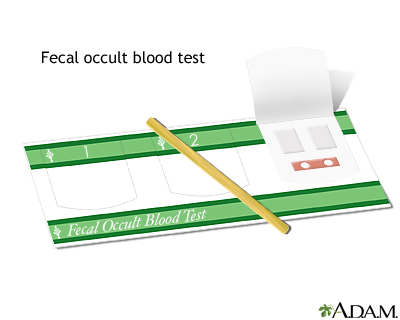
- A stool-based fecal occult blood (FOBT) or fecal immunochemical test (FIT) every year (colonoscopy is needed if results are positive)
- A stool sDNA-FIT test every 1 to 3 years (colonoscopy is needed if results are positive)
- Flexible sigmoidoscopy every 5 years or every 10 years with FIT done every year
- CT colonography (virtual colonoscopy) every 5 years
You may need a colonoscopy more often if you have risk factors for colorectal cancer, such as:
- Ulcerative colitis or Crohn disease
- A personal or family history of colorectal cancer or polyps
- A family history of inherited colorectal cancer syndromes such as familial adenomatous polyposis (FAP) or hereditary nonpolyposis colorectal cancer (HNPCC)
DENTAL EXAM
Go to the dentist once or twice every year for an exam and cleaning. Your dentist will evaluate if you need more frequent visits.
PREDIABETES AND TYPE 2 DIABETES SCREENING
You should be screened for prediabetes and type 2 diabetes starting at age 35 if you are overweight or have obesity. Screening should be repeated every 3 years if you still are overweight or have obesity.
Screening may need to start earlier and be repeated more often if you have other risk factors for diabetes, such as:
- You have a first-degree relative with diabetes
- You have high blood pressure, prediabetes, or a history of heart disease
- You have a history of diabetes during a pregnancy
Screening for diabetes should be done if you are planning to become pregnant and you are overweight or have obesity and have other risk factors such as high blood pressure.
EYE EXAM
An eye exam measures clarity and sharpness of vision and checks for vision problems. It is recommended that you:
- Have an eye exam every 2 to 4 years ages 40 to 54 and every 1 to 3 years ages 55 to 64. Your provider may recommend more frequent eye exams if you have vision problems or glaucoma risk.
- Have an eye exam that includes an examination of your retina (back of your eye) at least every year if you have diabetes.
IMMUNIZATIONS
Commonly recommended vaccines include:
- Flu shot: you should get one every year.
- COVID-19 vaccine: one dose of the current vaccine is recommended for all people age 6 months and older. Talk with your provider about what is best for you.
- Respiratory syncytial virus (RSV) vaccine: one dose is recommended for women who are 32 weeks through 36 weeks and 6 days pregnant for the first time between September 1 and January 31. Additional doses aren't needed for later pregnancies. One dose is also needed for women who are 50 to 74 years old and have underlying conditions that put them at risk for severe RSV sickness.
- Pneumococcal vaccine: receive one dose if you are 50 years or older or don't know your vaccine history.
- Tetanus-diphtheria and acellular pertussis (Tdap) vaccine: have as one of your tetanus-diphtheria vaccines if you did not receive it as an adolescent.
- Tetanus-diphtheria: have a booster (Td or Tdap) every 10 years.
- Varicella vaccine: receive 2 doses if you never had chickenpox or the varicella vaccine and were born in 1980 or after.
- Hepatitis B vaccine: receive 2, 3, or 4 doses, depending on your exact circumstances, if you did not receive these as a child or adolescent, until age 59.
- Measles, mumps, and rubella (MMR) vaccine: receive 1 to 2 doses if you are not already immune to MMR. Your provider can tell you if you are immune.
- Human papilloma virus (HPV): receive 2 to 3 doses up to age 45.
- Shingles (herpes zoster) vaccine: 2 doses at or after age 50.
Ask your provider if you should receive other immunizations if you have certain health problems that increase your risk for some diseases, such as pneumonia.
INFECTIOUS DISEASE SCREENING
Recommended screenings include:
- Women 25 years and older should be screened for chlamydia and gonorrhea if at high risk.
- All adults ages 18 to 79 should get a one-time test for hepatitis C.
- Pregnant women should be screened for hepatitis B and syphilis with every pregnancy.
- All people ages 15 to 65 should get a one-time test for human immunodeficiency virus (HIV).
- Annual HIV screenings for people at increased risk, such as being sexually active with men of unknown HIV status or having other risk factors such as injection drug use.
Depending on your lifestyle and medical history, you may need to be screened for infections such as syphilis, chlamydia, and other infections.
LUNG CANCER SCREENING
You should have an annual screening for lung cancer with low-dose computed tomography (LDCT) if all of the following are present:
- You are age 50 to 80 years AND
- You have a 20 pack-year smoking history AND
- You currently smoke or have quit within the past 15 years
OSTEOPOROSIS SCREENING
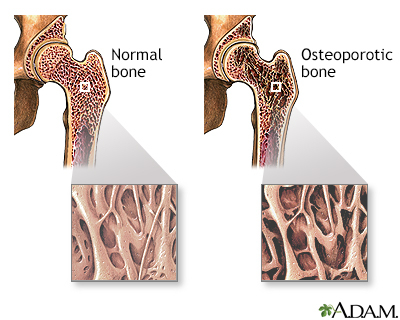
If you are 65 years or older, you should be screened for osteoporosis to prevent fractures. Postmenopausal women who are younger than 65 years and have one or more osteoporosis risk factors should also be screened for osteoporosis.
Risk factors can include long-term steroid use, low body weight, smoking, heavy alcohol use, having a fracture after age 50, or a family history of hip fracture or osteoporosis.
PHYSICAL EXAM
Your blood pressure, height, weight, and body mass index (BMI) should be checked at each exam.
During your exam, your provider may ask you about:
- Depression and anxiety
- Diet and exercise
- Alcohol, tobacco, and drug use
- Safety issues, such as using seat belts and smoke detectors and intimate partner violence
- Your medicines and risk for interactions
SKIN EXAM
Your provider may check your skin for signs of skin cancer, especially if you're at high risk. You may be at high risk if you:
- Have had skin cancer before
- Have close relatives with skin cancer
- Have a weakened immune system
Professional organizations do not recommend for or against performing a skin self-exam.
Gallery


References
American Academy of Ophthalmology website. Comprehensive adult medical eye examination PPP 2025. www.aao.org/education/preferred-practice-pattern/comprehensive-adult-medical-eye-evaluation-ppp. Updated February 2026. Accessed October 14, 2026.
American Cancer Society website. Breast cancer early detection and diagnosis: American Cancer Society recommendations for the early detection of breast cancer. www.cancer.org/cancer/types/breast-cancer/screening-tests-and-early-detection/american-cancer-society-recommendations-for-the-early-detection-of-breast-cancer.html. Updated July 23, 2026. Accessed October 14, 2026.
American College of Obstetricians and Gynecologists (ACOG) website. FAQ163: Cervical cancer. www.acog.org/womens-health/faqs/cervical-cancer. Updated July 2026. Accessed October 14, 2026.
American College of Obstetricians and Gynecologists (ACOG) website. FAQ178: Mammography and other screening tests for breast problems. www.acog.org/womens-health/faqs/ mammography-and-other-screening-tests-for-breast-problems. Last Reviewed: May 2026. Accessed October 14, 2026.
American Dental Association website. Your top 9 questions about going to the dentist -- answered! www.mouthhealthy.org/dental-care/questions-about-going-to-the-dentist. Accessed October 14, 2026.
American Diabetes Association Professional Practice Committee. 2. Diagnosis and classification of diabetes: standards of care in diabetes-2025. Diabetes Care. 2025;48(1 Suppl 1):S27-S49. PMID: 39651986 pubmed.ncbi.nlm.nih.gov/39651986/.
American Heart Association website. How to get your cholesterol tested. www.heart.org/en/health-topics/cholesterol/how-to-get-your-cholesterol-tested. Last reviewed March 18, 2026. Accessed October 14, 2026.
Barton MB, Wolff TA. The preventive health visit. In: Goldman L, Cooney KA, eds. Goldman-Cecil Medicine. 27th ed. Philadelphia, PA: Elsevier; 2024:chap 12.
Brown HL, Warner JJ, Gianos E, et al; American Heart Association and the American College of Obstetricians and Gynecologists. Promoting risk identification and reduction of cardiovascular disease in women through collaboration with obstetricians and gynecologists: a presidential advisory from the American Heart Association and the American College of Obstetricians and Gynecologists. Circulation. 2018;137(24):e843-e852. PMID: 29748185 pubmed.ncbi.nlm.nih.gov/29748185/.
Bushnell C, Kernan WN, Sharrief AZ, et al. 2024 guideline for the primary prevention of stroke: a guideline from the American Heart Association/American Stroke Association. Stroke. 2024;55(12):e344-e424. PMID: 39429201 pubmed.ncbi.nlm.nih.gov/39429201/.
Centers for Disease Control and Prevention website. Recommended vaccinations for adults. Recommended immunizations for adults aged 19 years and older, United States, 2025. www.cdc.gov/vaccines/imz-schedules/adult-easyread.html. Updated July 2, 2025. Accessed October 14, 2026.
Mora S, Libby P, Ridker PM. Primary prevention of cardiovascular disease. In: Bonow RO, Mann DL, Tomaselli GF, et al, eds. Braunwald's Heart Disease: A Textbook of Cardiovascular Medicine. 13th ed. Philadelphia, PA: Elsevier; 2026:chap 23.
National Cancer Institute website. Breast cancer screening (PDQ) - health professional version. www.cancer.gov/types/breast/hp/breast-screening-pdq. Updated April 10, 2025. Accessed October 14, 2026.
US Preventive Services Task Force website. Final recommendation statement. Breast cancer: medication use to reduce risk. www.uspreventiveservicestaskforce.org/uspstf/recommendation/breast-cancer-medications-for-risk-reduction. Updated September 3, 2019. Accessed October 14, 2026.
US Preventive Services Task Force website. Final recommendation statement. Breast cancer: screening. www.uspreventiveservicestaskforce.org/uspstf/recommendation/ breast-cancer-screening. Updated April 30, 2024. Accessed October 14, 2026.
US Preventive Services Task Force website. Final recommendation statement. Cervical cancer: screening. www.uspreventiveservicestaskforce.org/uspstf/recommendation/cervical-cancer-screening. Published August 21, 2018. Accessed October 14, 2026.
US Preventive Services Task Force website. Final recommendation statement. Colorectal cancer: screening. www.uspreventiveservicestaskforce.org/uspstf/recommendation/colorectal-cancer-screening. Published May 18, 2021. Accessed October 14, 2026.
US Preventive Services Task Force website. Final recommendation statement. Falls prevention in community-dwelling older adults: interventions. www.uspreventiveservicestaskforce.org/uspstf/recommendation/falls-prevention-community-dwelling-older-adults-interventions. Published June 4, 2024. Accessed October 14, 2026.
US Preventive Services Task Force website. Final recommendation statement. Hepatitis C virus infection in adolescents and adults: screening. www.uspreventiveservicestaskforce.org/uspstf/recommendation/hepatitis-c-screening. Published March 2, 2020. Accessed October 14, 2026.
US Preventive Services Task Force website. Final recommendation statement. Human immunodeficiency virus (HIV) infection: screening. www.uspreventiveservicestaskforce.org/uspstf/recommendation/human-immunodeficiency-virus-hiv-infection-screening. Published June 11, 2019. Accessed October 14, 2026.
US Preventive Services Task Force website. Final recommendation statement. Hypertension in adults: screening. www.uspreventiveservicestaskforce.org/uspstf/recommendation/hypertension-in-adults-screening. Published April 27, 2021. Accessed October 14, 2026.
US Preventive Services Task Force website. Final recommendation statement. Lung cancer: screening. www.uspreventiveservicestaskforce.org/uspstf/recommendation/lung-cancer-screening. Updated March 9, 2021. Accessed October 14, 2026.
US Preventive Services Task Force website. Final recommendation statement. Osteoporosis to prevent fractures: screening. www.uspreventiveservicestaskforce.org/uspstf/recommendation/osteoporosis-screening. Updated January 14, 2025. Accessed October 14, 2026.
US Preventive Services Task Force website. Final recommendation statement. Prediabetes and type 2 diabetes: screening. www.uspreventiveservicestaskforce.org/uspstf/recommendation/screening-for-prediabetes-and-type-2-diabetes. Updated August 24, 2021. Accessed October 14, 2026.
US Preventive Services Task Force website. Final recommendation statement. Skin cancer: screening. www.uspreventiveservicestaskforce.org/uspstf/recommendation/skin-cancer-screening. Updated April 18, 2023. Accessed October 14, 2026.
Writing Committee Members; Blumenthal RS, Morris PB, et al. 2026 ACC/AHA/AACVPR/ABC/ACPM/ADA/AGS/APhA/ASPC/NLA/PCNA Guideline on the management of dyslipidemia: A report of the American College of Cardiology/American Heart Association Joint Committee on Clinical Practice Guidelines. Circulation. 2026;153(17):e1154-e1276. PMID: 41824552 pubmed.ncbi.nlm.nih.gov/41824552/.
Writing Committee Members; Jones DW, Ferdinand KC, et al. 2025 AHA/ACC/AANP/AAPA/ABC/ACCP/ACPM/AGS/AMA/ASPC/NMA/PCNA/SGIM guideline for the prevention, detection, evaluation and management of high blood pressure in adults: a report of the American College of Cardiology/American Heart Association Joint Committee on Clinical Practice Guidelines. Hypertension. 2025;82(10):e212-e316. PMID: 40811516 pubmed.ncbi.nlm.nih.gov/40811516/.
Related specialties
Our locations
Community and Patient Programs: Health Screenings for Women Ages 40 to 64
Our community and patient programs provide great value to patients, families and loved ones. People can find support, educational materials, expert consultants and more. In most instances, these programs are offered free of charge.
-
HealthStreet
Helps bridge the gap between community members and resources available to them, including health screenings, classes and other services.
-
Hereditary Cancer Program
Helps patients and their families determine if they are at an increased genetic risk to develop cancer.
-
UF Health at Work Program
Provides convenient health promotion services by offering members reliable health information, education and preventative screenings at their work sites or other convenient locations.
-
UF Mobile Outreach Clinic
Provides primary medical care services at no cost to the patient.