Alecia Defeats Decades of Heart Failure With Historic Transplant at UF Health
Alecia Cosey came to, slumped over in the driver’s seat, to find her 16-year-old daughter crying and gripping the steering wheel. “Momma, are you OK?” Dayshai…

Palpitations are feelings or sensations that your heart is pounding or racing. They can be felt in your chest, throat, or neck.
You may:
Your heart's rhythm may be normal or abnormal when you have palpitations.
Heartbeat sensations; Irregular heartbeat; Palpitations; Heart pounding or racing
Normally the heart beats 60 to 100 times per minute. The rate may drop below 60 beats per minute in people who exercise regularly or take medicines that slow the heart.
If your heart rate is fast (over 100 beats per minute), this is called tachycardia. A heart rate slower than 60 is called bradycardia. An occasional extra heartbeat out of rhythm is known as extrasystole.
Palpitations are not serious most of the time. Sensations representing an abnormal heart rhythm (arrhythmia) may be more serious.
The following conditions make you more likely to have an abnormal heart rhythm:
Heart palpitations can be due to:
However, some palpitations are due to an abnormal heart rhythm, which may be caused by:
Things you can do to limit palpitations include:
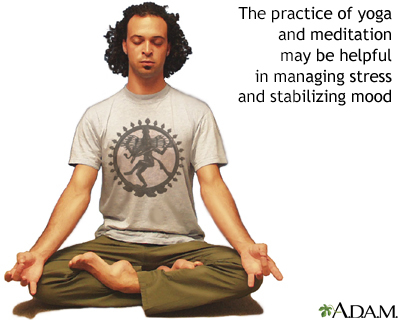
Once a serious cause has been checked for by your health care provider, try not to pay close attention to heart palpitations. This may cause stress. However, contact your provider if you notice a sudden increase or a change in them.
If you have never had heart palpitations before, see your provider.
Call 911 or the local emergency number if you have:
Contact your provider right away if:
Your provider will examine you and ask questions about your medical history and symptoms.
You may be asked:
An electrocardiogram may be done.
If you go to an emergency room, you will be connected to a heart monitor. However, most people with palpitations do not need to go to an emergency room for diagnosis and treatment.
If your provider finds you have an abnormal heart rhythm, other tests may be done. This may include:

Curtis AB, Tomaselli GF. Approach to the patient with cardiac arrhythmias. In: Bonow RO, Mann DL, Tomaselli GF, et al, eds. Braunwald's Heart Disease: A Textbook of Cardiovascular Medicine. 13th ed. Philadelphia, PA: Elsevier; 2026:chap 43.
Fang JC, Metkus TS, O'Gara PT. History, physical examination, and the virtual visit. In: Bonow RO, Mann DL, Tomaselli GF, et al, eds. Braunwald's Heart Disease: A Textbook of Cardiovascular Medicine. 13th ed. Philadelphia, PA: Elsevier; 2026:chap 11.
Olgin JE. Approach to the patient with suspected arrhythmia. In: Goldman L, Cooney KA, eds. Goldman-Cecil Medicine. 27th ed. Philadelphia, PA: Elsevier; 2024:chap 49.
Alecia Cosey came to, slumped over in the driver’s seat, to find her 16-year-old daughter crying and gripping the steering wheel. “Momma, are you OK?” Dayshai…
August 6, 2021
As students prepare to return to school, the coronavirus delta variant of the SARS-CoV-2 virus continues to surge. Meanwhile, an internal report by the Centers…
Department of Epidemiology, Department of Pediatrics, +4 more
