High Blood Cholesterol Levels

Definition

Cholesterol is a type of fat (called a lipid) that your body needs to work properly. There are "good" and "bad" types of cholesterol. Too much bad cholesterol in your blood can increase your chance of getting heart disease, stroke, and other health problems.

Common medical terms for high blood cholesterol are:

  • Lipid disorder
  • Hyperlipidemia
  • Hypercholesterolemia

Test Your Cholesterol Knowledge

What does a lipid profile (also called a lipid panel) measure?

Answer:

The correct answer is all of the above. The test measures the level of these fats, or lipids, in your blood. Cholesterol is found in all parts of the body. Your body needs a little bit of cholesterol. But too much cholesterol can clog your arteries and lead to heart disease and stroke. Some cholesterol is considered "good" (HDL) and some is considered "bad" (LDL).

Having high LDL cholesterol is healthy.

Answer:

The correct answer is false. When you have too much LDL, or "bad," cholesterol in your blood, it can build up on artery walls, causing them to become hard and narrow. The lower your LDL, the lower your risk for heart disease. Ask your doctor what your LDL level should be.

Which type of cholesterol is called "good" cholesterol?

Answer:

The correct answer is HDL. HDL helps remove LDL cholesterol from artery walls. HDL levels of 60 mg/dL or above helps protect you from heart disease. HDL below 40 mg/dL for men and below 50 mg/dL for women can increase your risk for heart disease.

Having high cholesterol and triglyceride levels increases your risk for:

Answer:

The correct answer is all of the above. When plaque builds up on your artery walls, blood clots can form that block blood flow to the heart or brain, causing a heart attack or stroke. Talk with your doctor about how you can lower your risk for heart disease.

Medicine is the only treatment for high cholesterol and triglycerides.

Answer:

The correct answer is false. Improving your health habits can lower cholesterol and triglyceride levels. Sometimes, lifestyle changes alone aren't enough, so your doctor may prescribe medicine.

Which habits can lead to high cholesterol levels?

Answer:

The correct answer is all of the above. Family history, diabetes, and other medical problems also increase your risk. Ask your doctor about healthy changes you can make to help lower high cholesterol.

If you are overweight, losing just 10 pounds can help lower cholesterol levels.

Answer:

The correct answer is true. To lose about one pound a week, eat about 500 fewer calories a day. You can lose weight by eating smaller portions. Also replace low-fiber, high-fat foods with lean meats and other proteins, whole grains, low-fat dairy products, and plenty of fruits and vegetables.

Getting regular exercise can improve your cholesterol numbers.

Answer:

The correct answer is true. Exercising 30 minutes a day at least 5 days a week can help increase HDL levels. If you haven't been active, check with your doctor before starting to exercise. Start by walking just a few minutes several times a week. Build up to 30 minutes of brisk exercise 5 days a week.

Heart-healthy fats include:

Answer:

The correct answer is monounsaturated and polyunsaturated fats. They are found in fish, nuts, seeds, avocados, and olive, canola, corn, soy, and sunflower oils. Replacing saturated and trans fats with these healthy fats helps lower LDL and increase HDL. Omega-3s from fish help lower high triglycerides.

Quitting smoking can help you:

Answer:

The correct answer is all of the above. Quitting isn't easy, but keep in mind that the more times you attempt to quit, the more likely you are to be successful.

Alternative Names

Cholesterol - high; Lipid disorders; Hyperlipoproteinemia; Hyperlipidemia; Dyslipidemia; Hypercholesterolemia

Causes

There are many types of cholesterol. The most commonly discussed are:

  • Total cholesterol -- a measurement of all types of cholesterol together
  • Low density lipoprotein (LDL) cholesterol -- often called bad cholesterol
  • Very low density lipoprotein cholesterol (VLDL) -- similar to LDL cholesterol
  • High density lipoprotein (HDL) cholesterol -- often called good cholesterol

For many people, abnormal cholesterol levels are partly due to lifestyle factors:
  • Eating a diet that is high in fat
  • Having overweight or having obesity
  • Low physical activity
  • Smoking, which can reduce your HDL (good cholesterol)
Heart - section through the middle
The interior of the heart is composed of valves, chambers, and associated vessels.

Some health conditions can also lead to abnormal cholesterol levels, including:

  • Diabetes
  • Kidney disease
  • Polyendocrine metabolic ovarian syndrome
  • Pregnancy and other conditions that increase levels of female hormones
  • Underactive thyroid gland

Some medicines also may raise cholesterol levels, such as certain types of:

  • Birth control pills
  • Diuretics (water pills)
  • Beta-blockers
  • Antidepressants

Several diseases that are passed down through families lead to abnormal cholesterol and triglyceride levels. They include:

  • Familial combined hyperlipidemia
  • Familial dysbetalipoproteinemia
  • Familial hypercholesterolemia
  • Familial hypertriglyceridemia

Exams and Tests

A cholesterol test called a lipid profile is done to diagnose a lipid disorder. The American College of Cardiology/American Heart Association guidelines call for everyone to have their first lipid profile by age 19. Children ages 9 to 11 years old should have their cholesterol tested once to check for familial hypercholesterolemia or other lipid problems.

Follow-up testing should be done:

  • Every 5 years for adults with normal cholesterol levels
  • Sooner if lifestyle changes occur, including weight gain or a change in diet
  • More often for adults with a history of elevated cholesterol, diabetes, kidney problems, heart disease, and other blood vessel conditions

It is important to work with your health care provider to set your cholesterol goals.

General targets are:

LDL:

  • Less than 100 mg/dL (2.59 mmol/L) for people at moderate risk for heart disease and stroke (primary prevention)
  • Less than 70 mg/dL if you are at high risk, have diabetes, or have other risk factors (primary prevention)
  • Less than 55 mg/dL if you have had a heart attack or stroke (secondary prevention)

HDL:

  • 60 mg/dL (1.55 mmol/L) or higher
  • Higher numbers are better

Total cholesterol:

  • Less than 200 mg/dL (5.18 mmol/L)
  • Lower numbers are better

Triglycerides:

  • Less than 150 mg/dL (1.69 mmol/L)
  • Lower numbers are better
Cholesterol
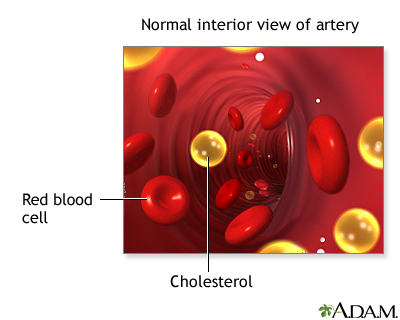
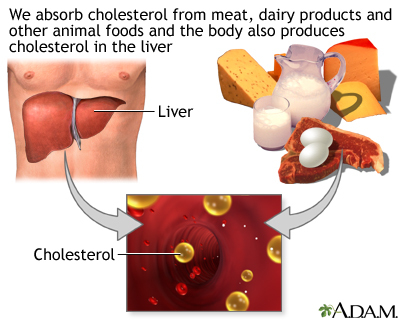
Cholesterol is a soft, waxy substance that is present in all parts of the body including the nervous system, skin, muscle, liver, intestines, and heart. It is made by the body and obtained from animal products in the diet. Cholesterol is manufactured in the liver and is needed for normal body functions including the production of hormones, bile acid, and Vitamin D. Excessive cholesterol in the blood contributes to atherosclerosis and subsequent heart disease. The risk of developing heart disease or atherosclerosis increases as the level of blood cholesterol increases.

If your cholesterol results are abnormal, you may also have other tests such as:

  • Blood sugar (glucose) test to look for diabetes
  • Kidney function tests
  • Thyroid function tests to look for an underactive thyroid gland

Treatment

Steps you can take to improve your cholesterol levels and to help prevent heart disease and a heart attack include:

  • Quit smoking. This is the single biggest change you can make to reduce your risk of heart attack and stroke.
  • Eat a heart-healthy diet. This includes foods that are naturally low in fat such as vegetables, fruits and whole-grains.
  • Use low-fat toppings, sauces, and dressings.
  • Avoid foods that are high in saturated fat.
  • Exercise regularly.
  • Lose weight if you are overweight or have obesity.

Your provider may want you to take medicine for your cholesterol if lifestyle changes do not work. This will depend on:

  • Your age
  • Whether or not you have heart disease, diabetes, or other blood vessel problems
  • Whether you smoke or are overweight
  • Whether you have high blood pressure or diabetes

You are more likely to need medicine to lower your cholesterol:

  • If you have heart disease or diabetes
  • If you are at high risk for heart disease (even if you do not yet have any heart problems)
  • If your LDL cholesterol is 160 mg/dL (4.14 mmol/L) or higher
  • Your lipoprotein (a) [(lp(a)] level is 125 nmol/L or 50 mg/dL or higher

There are several types of medicines to help lower blood cholesterol levels. The medicines work in different ways. Statins are one kind of medicine that lowers cholesterol and has been proven to reduce the chance of heart disease. Other medicines are available if your risk is high and statins do not lower your cholesterol levels enough. These include ezetimibe, bempedoic acid, and PCSK9 inhibitors. Check with your provider about what is best for you.

Outlook (Prognosis)

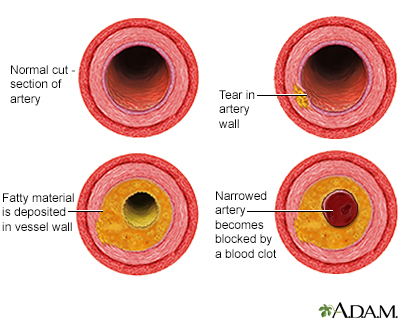
High cholesterol levels can lead to hardening of the arteries, also called atherosclerosis. This occurs when fat, cholesterol, and other substances build up in the walls of arteries and form hard structures called plaques.
Developmental process of atherosclerosis
The development of arterial atherosclerosis may occur when deposits of cholesterol and plaque accumulate at a tear in the inner lining of an artery. As the deposits harden and occlude the arterial lumen, blood flow to distant tissues decreases and a clot may become lodged, completely blocking the artery.

Over time, these plaques can narrow the arteries and cause heart disease, and other symptoms or problems throughout the body.

Sometimes the plaques can rupture or break loose and a clot can form and block blood flow and cause a heart attack or stroke.

Disorders that are passed down through families often lead to higher cholesterol levels that are harder to control.
Gallery

Heart - section through the middle
The interior of the heart is composed of valves, chambers, and associated vessels.
Coronary artery disease
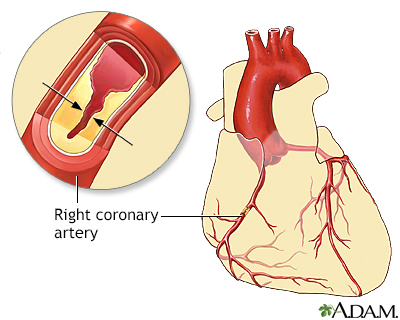
The coronary arteries supply blood to the heart muscle itself. Blood supply through these arteries is critical for the heart. Coronary artery disease usually results from the build-up of fatty material and plaque, a condition called atherosclerosis. As the coronary arteries narrow, the flow of blood to the heart can slow or stop, causing chest pain (stable angina), shortness of breath, heart attack, or other symptoms.
Cholesterol
Cholesterol is a soft, waxy substance that is present in all parts of the body including the nervous system, skin, muscle, liver, intestines, and heart. It is made by the body and obtained from animal products in the diet. Cholesterol is manufactured in the liver and is needed for normal body functions including the production of hormones, bile acid, and Vitamin D. Excessive cholesterol in the blood contributes to atherosclerosis and subsequent heart disease. The risk of developing heart disease or atherosclerosis increases as the level of blood cholesterol increases.
Developmental process of atherosclerosis
The development of arterial atherosclerosis may occur when deposits of cholesterol and plaque accumulate at a tear in the inner lining of an artery. As the deposits harden and occlude the arterial lumen, blood flow to distant tissues decreases and a clot may become lodged, completely blocking the artery.

References

American Diabetes Association Professional Practice Committee for Diabetes*. 10. Cardiovascular Disease and Risk Management: Standards of Care in Diabetes-2026. Diabetes Care. 2026 Jan 1;49(Supplement_1):S216-S245. PMID: 41358899; PMCID: PMC12690187. pubmed.ncbi.nlm.nih.gov/41358899/.

Blumenthal RS, Morris PB, Gaudino M, et al.. 2026 ACC/AHA/AACVPR/ABC/ACPM/ADA/AGS/APhA/ASPC/NLA/PCNA Guideline on the Management of Dyslipidemia: A Report of the American College of Cardiology/American Heart Association Joint Committee on Clinical Practice Guidelines. Circulation. 2026 Apr 28;153(17):e1154-e1276. Epub 2026 Mar 13. PMID: 41824552. pubmed.ncbi.nlm.nih.gov/41824552/.

Libby P. The vascular biology of atherosclerosis. In: Bonow RO, Mann DL, Tomaselli GF, et al, eds. Braunwald's Heart Disease: A Textbook of Cardiovascular Medicine. 13th ed. Philadelphia, PA: Elsevier; 2026:chap 22.

Mora S, Martin SS. Measurement of low-density lipoprotein cholesterol, non–high-density lipoprotein cholesterol, apolipoprotein B, and low-density lipoprotein particle concentration. In: Ballantyne CM, ed. Clinical Lipidology:A Companion to Braunwald's Heart Disease. 3rd ed. Philadelphia, PA: Elsevier; 2024:chap 3.

Robinson JG. Disorders of lipid metabolism. In: Goldman L, Cooney KA, eds. Goldman-Cecil Medicine. 27th ed. Philadelphia, PA: Elsevier; 2024:chap 190.

Tokgözoglu L, Libby P. Lipoprotein disorders and cardiovascular disease. In: Bonow RO, Mann DL, Tomaselli GF, et al, eds. Braunwald's Heart Disease: A Textbook of Cardiovascular Medicine. 13th ed. Philadelphia, PA: Elsevier; 2026:chap 25.

US Preventive Services Task Force; Mangione CM, Barry MJ, et al. Statin use for the primary prevention of cardiovascular disease in adults: US Preventive Services Task Force Recommendation Statement. JAMA. 2022;328(8):746-753. PMID: 35997723 pubmed.ncbi.nlm.nih.gov/35997723/.

US Preventive Services Task Force; Barry MJ, Nicholson WK, et al. Screening for lipid disorders in children and adolescents: US Preventive Services Task Force Recommendation Statement. JAMA. 2023;330(3):253-260. PMID: 37462699 pubmed.ncbi.nlm.nih.gov/37462699/.

Last reviewed July 21, 2026 by Michael A. Chen, MD, PhD, Associate Professor of Medicine, Division of Cardiology, Harborview Medical Center, University of Washington Medical School, Seattle, WA. Also reviewed by David C. Dugdale, MD, Medical Director, Brenda Conaway, Editorial Director, and the A.D.A.M. Editorial team..

Related specialties

Aftercare and more

Our locations

Our experts

Independent doctors are not employed by UF Health, but may provide medical care at one of our locations.

News and patient stories: High Blood Cholesterol Levels

New study shows a role for cholesterol in pain perception

February 27, 2024

When you stub your toe or bump your head, you know that rubbing the injury can lessen the ouch. But how? New research from the lab of Scott B. Hansen, Ph.D.,…

The Herbert Wertheim UF Scripps Institute for Biomedical Innovation & Technology, University of Florida

Scott B. Hansen, Ph.D.,