Meckel Diverticulum
Definition
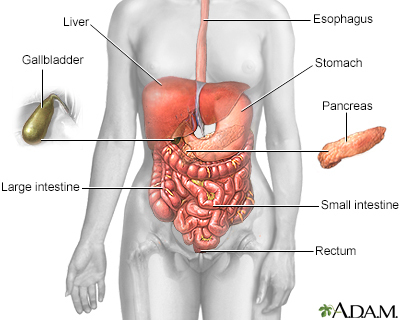
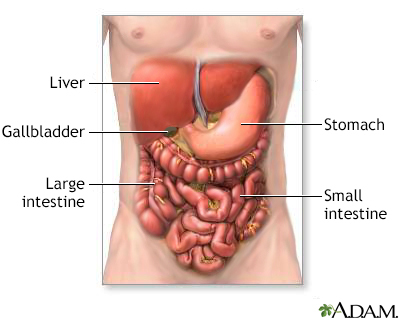
A Meckel diverticulum is a pouch on the wall of the lower part of the small intestine that is present at birth (congenital). The diverticulum may contain tissue similar to that of the stomach or pancreas. The abnormal tissue can secrete acid, which may irritate the tissues.

Causes
A Meckel diverticulum is tissue left over from when a baby's digestive tract was forming before birth. A small number of people have a Meckel diverticulum. However, only a few develop symptoms.
Symptoms
Symptoms may include:
- Pain in the abdomen that can be mild or severe.
- Blood in the stool. This may be red, black and sticky, or maroon and jelly-like (called currant-jelly stools). Bleeding is often painless.
- Nausea and vomiting.
Symptoms often occur during the first few years of life. However, they may not start until adulthood.
Exams and Tests
You may have the following tests:
- Hematocrit
- Hemoglobin
- Stool smear for invisible blood (stool occult blood test or fecal immunochemical test)
- CT scan
- Technetium scan (also called a Meckel scan)
Treatment
You may need surgery to remove the diverticulum if bleeding develops, a blockage occurs, or a hole (perforated ulcer) in the small intestine happens. The segment of small intestine that contains the diverticulum is taken out. The ends of the intestine are sewn back together.
You may need to take iron supplements to treat anemia. You may need a blood transfusion if you have a lot of bleeding,
Outlook (Prognosis)
Most people recover fully from surgery and will not have the problem come back. Complications from the surgery are also unlikely.
Possible Complications
Complications may include:
- Excess bleeding (hemorrhage) from the diverticulum
- Folding of the intestines (intussusception), a type of blockage
- Peritonitis
- Tear (perforation) of the bowel at the diverticulum
When to Contact a Medical Professional
See your health care provider right away if your child passes blood or bloody stool or has ongoing abdominal pain.
Gallery

References
Bass LM, Wershil BK. Anatomy, histology, embryology, and developmental anomalies of the small and large intestine. In: Feldman M, Friedman LS, Brandt LJ, eds. Sleisenger and Fordtran's Gastrointestinal and Liver Disease. 11th ed. Philadelphia, PA: Elsevier; 2021:chap 98.
Kleigman RM, St. Geme JW, Blum NJ, et al. Intestinal duplications, Meckel diverticulum, and other remnants of the omphalomesenteric duct. In: Kliegman RM, St. Geme JW, Blum NJ, et al, eds. Nelson Textbook of Pediatrics. 22nd ed. Philadelphia, PA: Elsevier; 2025:chap 377.