Primary Lymphoma of the Brain
Definition
Primary lymphoma of the brain is cancer of white blood cells that starts in the brain.
Alternative Names
Brain lymphoma; Cerebral lymphoma; Primary lymphoma of the central nervous system; PCNSL; Lymphoma - B-cell lymphoma, brain
Causes
The cause of primary brain lymphoma is not known.
People with a weakened immune system are at high risk for primary lymphoma of the brain. Common causes of a weakened immune system include HIV/AIDS and having had an organ transplant (especially heart transplant).
Primary lymphoma of the brain may be linked to Epstein-Barr virus (EBV), especially in people with HIV/AIDS. EBV is the virus that causes mononucleosis.
Primary brain lymphoma is more common in people ages 45 to 70. The rate of primary brain lymphoma is rising. Almost 1,500 new people are diagnosed with primary brain lymphoma every year in the United States.
Symptoms
Symptoms of primary brain lymphoma may include any of the following:
- Changes in speech or vision
- Confusion or hallucinations
- Seizures
- Headaches, nausea, or vomiting
- Leaning to one side when walking
- Weakness in hands or loss of coordination
- Numbness to hot, cold, and pain
- Personality changes
- Weight loss
Exams and Tests
The following tests may be done to help diagnose a primary lymphoma of the brain:
- Biopsy of the brain tumor
- Head CT scan
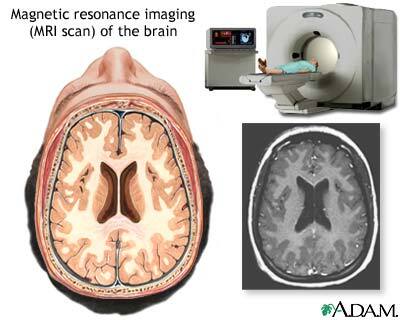
- Head MRI scan
- PET scan
- Spinal tap (lumbar puncture)
Treatment
The main treatment is with chemotherapy and certain monoclonal antibodies, which are a type of lab-made protein to treat many diseases, including cancer.
Younger people may receive high-dose chemotherapy, possibly followed by an autologous stem cell transplant.
Radiation therapy of the whole brain may be done after chemotherapy, but is often avoided due to potential neurologic complications.
Boosting the immune system, such as in those with HIV/AIDS or a history of organ transplant, may also be tried.
Outlook (Prognosis)
Without treatment, people with primary brain lymphoma survive for less than 6 months. When treated with chemotherapy, half of them will be in remission 10 years after being diagnosed. Survival may improve with autologous stem cell transplant.
Possible Complications
Possible complications include:
- Chemotherapy side effects, including low blood counts
- Radiation side effects, including confusion, headaches, nervous system (neurologic) problems, and tissue death
- Return (recurrence) of the lymphoma
Gallery
References
Dorsey JF, Salinas RD, Dang M, et al. Cancer of the central nervous system. In: Niederhuber JE, Armitage JO, Kastan MB, Doroshow JH, Tepper JE, eds. Abeloff's Clinical Oncology. 6th ed. Philadelphia, PA: Elsevier; 2020:chap 63.
National Cancer Institute website. Primary central nervous system lymphoma treatment (PDQ) - health professional version. www.cancer.gov/types/lymphoma/hp/primary-cns-lymphoma-treatment-pdq. Updated May 13, 2025. Accessed April 9, 2026.
National Comprehensive Cancer Network website. NCCN clinical practice guidelines in oncology (NCCN guidelines): central nervous system cancers. Version 3.2026. www.nccn.org/professionals/physician_gls/pdf/cns.pdf. Updated June 10, 2026. Accessed July 21, 2026.
Roque A, Hochberg FH, Baehring JM. Primary nervous system tumors in adults. In: Jankovic J, Mazziotta JC, Pomeroy SL, Newman NJ, eds. Bradley and Daroff's Neurology in Clinical Practice. 8th ed. Philadelphia, PA: Elsevier; 2022:chap 74.
Related specialties
Our experts
Community and Patient Programs: Primary Lymphoma of the Brain
Our community and patient programs provide great value to patients, families and loved ones. People can find support, educational materials, expert consultants and more. In most instances, these programs are offered free of charge.
-
Music in the Clinical Setting
Offers a wide variety of music-based therapies from in-room performances to collaborative recording sessions.