Prevent and Protect Yourself from HPV
This year, the University of Florida Health Cancer Center is recognizing March 4, International HPV Awareness Day, by equipping you with the information you…

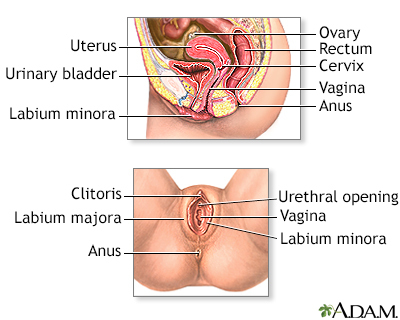
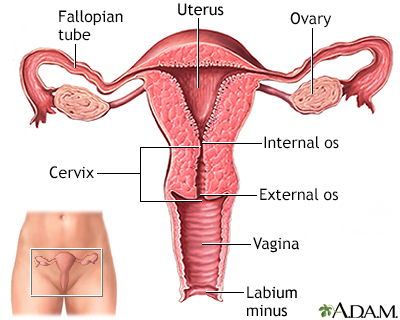
Vaginal cancer is cancer of the vagina, a female reproductive organ.
Vaginal cancer; Cancer - vagina; Tumor - vaginal
Most vaginal cancers occur when another cancer, such as cervical, vulvar, or endometrial cancer, spreads. This is called secondary vaginal cancer.
Cancer that starts in the vagina is called primary vaginal cancer. This type of cancer is rare. Most primary vaginal cancers start in skin-like cells called squamous cells. This cancer is known as squamous cell carcinoma. The other types include:
The cause of squamous cell carcinoma of the vagina is unknown. But a history of cervical cancer is common in women with squamous cell carcinoma of the vagina. So, it may be associated with human papilloma virus (HPV) infection.
Most women with squamous cell cancer of the vagina are over 50.
Adenocarcinoma of the vagina tends to affect younger women. The average age at which this cancer is diagnosed is 19. Women whose mothers took the medicine diethylstilbestrol (DES) to prevent miscarriages during the first 3 months of pregnancy are more likely to develop vaginal adenocarcinoma. Use of DES was halted by the FDA in 1971 due to this cancer risk.
Sarcoma of the vagina is a rare cancer that mainly occurs in infancy and early childhood.
Symptoms of vaginal cancer can include any of the following:
Some women have no symptoms.
In women with no symptoms, the cancer may be found during a routine pelvic exam and Pap test.
Other tests to diagnose vaginal cancer include:
Other tests that may be done to check if the cancer has spread include:
Other tests that may be done to know the stage of the vaginal cancer include:
Treatment of vaginal cancer depends on:
Surgery is sometimes used if the cancer is small and located at the upper part of the vagina. Most women are treated with radiation and chemotherapy. If the tumor is cervical cancer that has spread to the vagina, radiation and chemotherapy are both given.
Sarcoma may be treated with a combination of chemotherapy, surgery, and radiation.
You can ease the stress of illness by joining a support group whose members share common experiences and problems.
The outlook for women with vaginal cancer depends on the size and the stage of disease and the specific type of tumor.
Vaginal cancer may spread to other areas of the body. Complications can occur from radiation, surgery, and chemotherapy.
Contact your health care provider for an appointment if:
There are no definite ways to prevent this cancer.
The HPV vaccine is approved to help prevent cervical cancer. This vaccine may also decrease the risk of getting some other HPV-associated cancers, such as vaginal cancer. You can increase your chance of early detection by getting regular pelvic examinations and Pap smears.
Frumovitz M. Neoplastic diseases of the vulva and vagina. In: Gershenson DM, Lentz GM, Valea FA, Lobo RA, eds. Comprehensive Gynecology. 8th ed. Philadelphia, PA: Elsevier; 2022:chap 30.
Jhingran A, Russell AH, Seiden MV, et al. Cancers of the cervix, vulva, and vagina. In: Niederhuber JE, Armitage JO, Kastan MB, Doroshow JH, Tepper JE, eds. Abeloff's Clinical Oncology. 6th ed. Philadelphia, PA: Elsevier; 2020:chap 84.
National Cancer Institute website. Vaginal cancer treatment (PDQ) - health professional version. www.cancer.gov/types/vaginal/hp/vaginal-treatment-pdq. Updated April 3, 2025. Accessed March 13, 2026.
Our community and patient programs provide great value to patients, families and loved ones. People can find support, educational materials, expert consultants and more. In most instances, these programs are offered free of charge.
Improves health and quality of life for long-term cancer survivors.
An educational and networking event that brings together cancer patients, survivors, caregivers and health care professionals.
Can assist you through the treatment process in a number of practical and supportive ways.
This free online program educates those newly diagnosed with cancer on what to expect, how to manage stress, and navigate financial burdens, among other topics.
This year, the University of Florida Health Cancer Center is recognizing March 4, International HPV Awareness Day, by equipping you with the information you…