Brain Tumors

Many of the people who come to us for treatment options have been newly diagnosed with a brain tumor. Our patients are often referred to us from other physicians because they have very complex cases. Other times, they may be referred to us so they can be screened for candidacy for one of our clinical trials. And, sometimes, patients discover us on their own. Regardless of how you arrive to the Preston A. Wells Jr. Center for Brain Tumor Therapy at the University of Florida, we are glad you are here.
Established with the goal of curing brain cancer, the Center is the hub for some of the brightest minds in the fields of neuro-oncology, neurosurgery and radiation oncology. National leading researchers and their teams are collaborating daily with physicians who have dedicated their entire careers to finding a cure for brain cancer. Together, they are using the latest molecular, biological, medical and surgical techniques to understand the basic causes of brain tumors and develop entirely new treatment methods. UF Health neurosurgeons perform approximately 600 brain tumor operations annually, making them one of the highest volume academic neurosurgery teams in the country.
Brain tumor treatment at UF Health
At the Preston A. Wells Jr. Center for Brain Tumor Therapy at the University of Florida, we provide patients with access to one of the most advanced, comprehensive brain tumor treatment programs in the country.
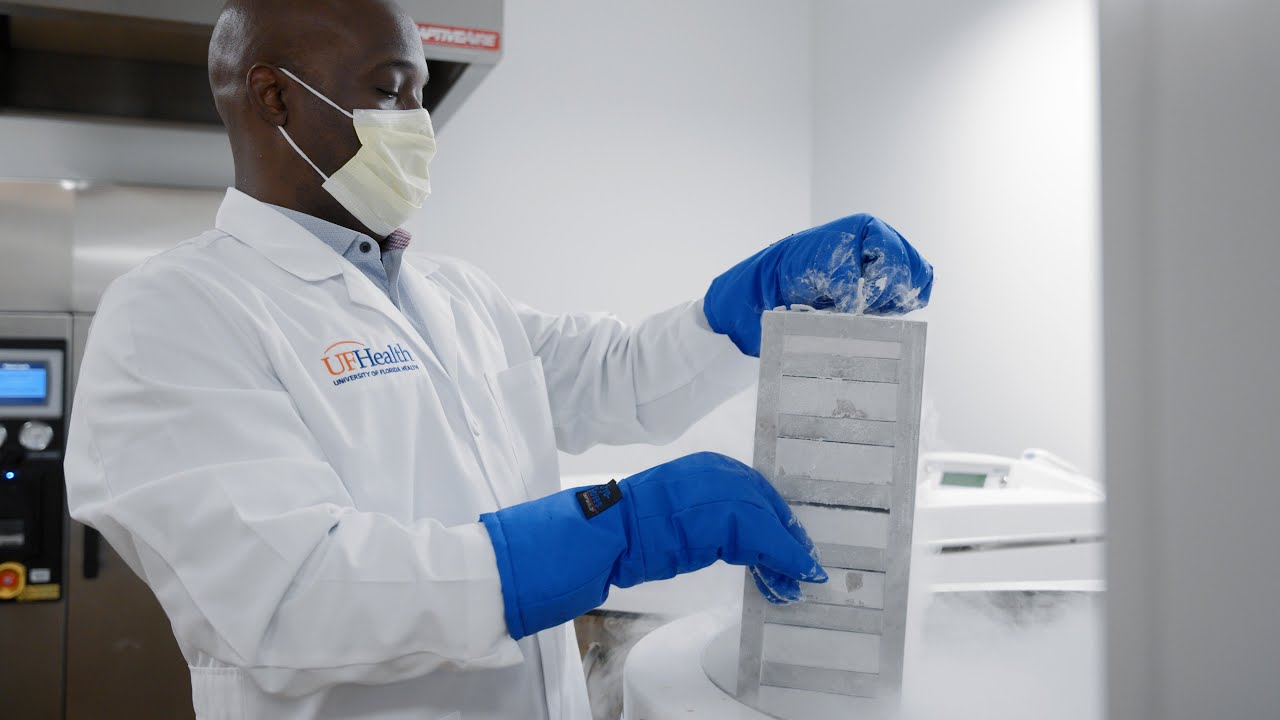
About the program
Receiving a brain tumor diagnosis is immediately life-altering. Connecting with a neuro-oncology team that is not only leading the country in research and clinical trials on brain tumors, but is also applying those findings to treat their patients every day is crucial for a patient’s journey. Thousands of patients across over 40 states and multiple countries have turned to and trusted the Wells Brain Tumor Center at UF for their care.

Why the mission to find a cure is so important to our team
Established with the goal of curing brain cancer, the Wells Brain Tumor Center at UF is the hub for the brightest minds in the fields of neuro-oncology, neurosurgery and radiation oncology. With a team of over 100, nation-leading researchers and their teams are collaborating daily with physicians who have dedicated their entire careers to finding a cure for brain cancer. The Wells Brain Tumor Center at UF utilizes innovative treatments such as immunotherapy and personalized medicine based on a patient’s individual genomic sequencing as well as multimodal therapies to treat a patient’s specific diagnosis.
Brain tumors: from bench to bedside

Patients from 40 states & 3 countries
Our patients have traveled from around the world for our leading-edge programs, clinical trials, personalized treatment.

100+ physicians, researchers, scientists and staff
Our team at the Wells Center for Brain Tumor Therapy at UF includes experts in several specialties.

Over $10 million a year invested in research funding
From immnotherapy to optune therapy, we are leading the country in searching for a cure for brain tumors.
Brain tumor facts
1.4% of newly diagnosed cancers are primary brain tumors
2.4% of cancer-related deaths are caused by brain tumors
Nearly half of all primary brain tumors are gliomas
80% of gliomas are considered grade three or four, which are fast-growing
The average age for developing primary brain tumors is 59
Patient education
Want to know more about adult brain tumors? Check out our Patient Education section for information on types, symptoms, and treatment, among other things.
Our locations
-
Specialty Care Practice UF Health Neurosurgery – Neuromedicine Hospital

-
Specialty Care Practice UF Health Pediatric Blood & Marrow Transplant and Cellular Therapy

-
Specialty Care Practice UF Health Proton Therapy Institute


Our experts
-
Robert J Amdur, MDRadiation Oncologist

-
Radiation Oncologist

-

-
Neurosurgeon, Spine Surgeon

-
Neuro-Oncologist (Brain Cancer Specialist)

-
Lance S Governale, MD, FAANS, FAAPPediatric Neurosurgeon


Additional team members
Related conditions & treatments
Clinical Trials: Brain Tumors
UF Health research scientists make medicine better every day. They discover new ways to help people by running clinical trials. When you join a clinical trial, you can get advanced medical care. Sometimes years before it's available everywhere. You can also help make medicine better for everyone else. If you'd like to learn more about clinical trials, visit our clinical trials page. Or click one of the links below:
The purpose of this study is to evaluate the safety and efficacy of targeted blood brain barrier disruption with Exablate Model 4000 Type 2.0/2.1 for liquid biopsy in subjects with suspected Glioblastoma brain tumors
- Investigator
- Justin D Hilliard
- Status
- Accepting Candidates
- Ages
- 18 Years - 80 Years
- Sexes
- All
This is a phase I study to assess the safety and feasibility of IL-8 receptor modified patient-derived activated CD70 CAR T cell therapy in CD70+ adult glioblastoma.
- Investigator
- Ashley Ghiaseddin
- Status
- Accepting Candidates
- Ages
- 18 Years - 80 Years
- Sexes
- All
The primary objective will be to demonstrate the manufacturing feasibility and safety, and to determine the maximum tolerated dose (MTD) of RNA-LP vaccines in (Stratum 1) adult patients with newly diagnosed GBM (MGMT unmethylated). Funding Source *…
- Investigators
- Marcia B Hodik, Ashley Ghiaseddin
- Status
- Accepting Candidates
- Ages
- 21 Years - N/A
- Sexes
- All
Community and Patient Programs: Brain Tumors
Our community and patient programs provide great value to patients, families and loved ones. People can find support, educational materials, expert consultants and more. In most instances, these programs are offered free of charge.
-
Music in the Clinical Setting
Offers a wide variety of music-based therapies from in-room performances to collaborative recording sessions.
-
Pain Management - Cancer
Pain management treatment plans for cancer patients.
News and Patient Stories: Brain Tumors
New mRNA cancer vaccine triggers fierce immune response to fight malignant brain tumor
May 1, 2024
In a first-ever human clinical trial of four adult patients, an mRNA cancer vaccine developed at the University of Florida quickly reprogrammed the immune…
McKnight Brain Institute, +1 more

Podcast: UF Using AI to Revolutionize the Evaluation of Common Brain Tumors
Researchers in the University of Florida College of Medicine are using artificial intelligence to analyze the chemical characteristics of Meningioma brain…

Latest podcast episodes
Simple urine test may help detect brain tumors early
Early diagnosis of brain tumors is often difficult. People often develop symptoms before tumors are found on a CT or MRI scan. Now, researchers in Japan say a simple urine test could someday...
Longer survival expectancy for brain tumor patients
Patients with low-grade brain tumors are now living about a year longer after diagnosis than they did 16 years ago. A study of a U.S. cancer registry showed that people with a grade II glioma had a...
New device may highlight brain tumor tissue for surgeons
Scientists at Johns Hopkins University are working to develop a device they say can be used like an ultrasound machine to find tumor tissue within the brain. The apparatus is a variation of an...