Definition
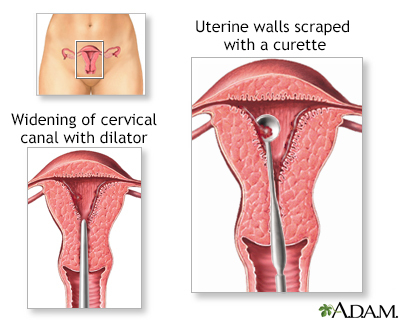
D and C (dilation and curettage) is a procedure to scrape and collect the tissue (endometrium) from inside the uterus.
- Dilation (D) is a widening of the cervix to allow instruments into the uterus.
- Curettage (C) is the scraping of tissue from the walls of the uterus.
Alternative Names
Dilation and curettage; Uterus scraping; Vaginal bleeding - dilation; Uterine bleeding - dilation; Menopause - dilation
Description
D and C, also called uterine scraping, may be performed in the hospital or in a clinic while you are under general or local anesthesia.
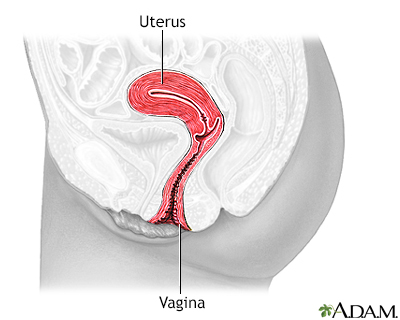
The health care provider will insert an instrument called a speculum into the vagina. This holds the vaginal canal open. Numbing medicine may be applied to the opening to the uterus (cervix).
The cervical canal is widened, and a curette (a metal loop on the end of a long, thin handle) is passed through the opening into the uterus cavity. The provider gently scrapes the inner layer of tissue, called the endometrium. The tissue is collected for examination.
Why the Procedure Is Performed
This procedure may be done to:
Your provider may also recommend a D and C if you have:
- Abnormal bleeding while you are on hormone replacement therapy
- An embedded intrauterine device (IUD)
- Bleeding after menopause
- Endometrial polyps (small lumps of tissue on the endometrium)
- Thickening of the uterus
This list may not include all possible reasons for a D and C.
Risks
Risks related to D and C include:
Risks due to anesthesia include:
Risks of any surgery include:
After the Procedure
The D and C procedure has few risks. It can provide relief from bleeding and can help diagnose cancer and other diseases.
You may return to your normal activities as soon as you feel better, possibly even the same day.
You may have vaginal bleeding, pelvic cramps, and back pain for a few days after the procedure. You can usually manage pain well with medicines. Avoid using tampons and having sexual intercourse for 1 to 2 weeks after the procedure.
References
Bulun SE. Physiology and pathology of the female reproductive axis. In: Melmed S, Auchus RJ, Goldfine AB, Koenig RJ, Rosen CJ, eds. Williams Textbook of Endocrinology. 14th ed. Philadelphia, PA: Elsevier; 2020:chap 17.
Ryntz T, Lobo RA. Abnormal uterine bleeding: etiology and management of acute and chronic excessive bleeding. In: Gershenson DM, Lentz GM, Valea FA, Lobo RA, eds. Comprehensive Gynecology. 8th ed. Philadelphia, PA: Elsevier; 2022:chap 26.
Williams VL, Thomas S. Dilation and curettage. In: Fowler GC, ed. Pfenninger and Fowler's Procedures for Primary Care. 4th ed. Philadelphia, PA: Elsevier; 2020:chap 162.