What is focal therapy?
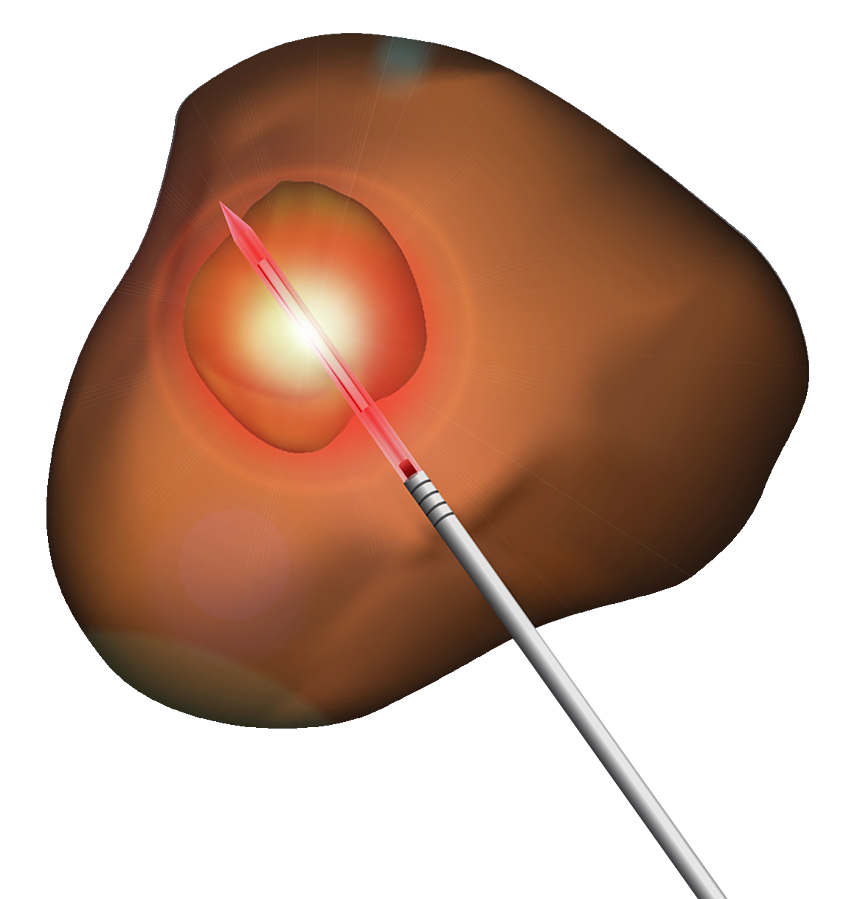
Focal therapy is a specialized form of prostate cancer treatment that seeks to treat prostate cancer and a margin of normal tissue while sparing the surrounding critical structures responsible for urinary continence and erectile function. There are multiple different energy types available for focal therapy, such as: focal cryoablation, irreversible electroporation, high intensity focused ultrasound and focal laser ablation. Less important than the energy used is making sure the tumor is localized and that appropriate margins are achieved.
Ablative therapies such as cryoablation, radiofrequency ablation and high-intensity focused ultrasound (HIFU) are currently being studied as a way to limit treatment to the focal location of the cancer instead of treating the entire prostate with the hopes that focal therapy will be associated with fewer side effects than other non-focal treatments. The prostate cancer doctors at UF Health are experts in using these therapeutic treatments that target only the cancer, and not the whole prostate.
Selection of appropriate, low-risk patients is essential because less therapy may not be adequate to control higher-volume or high-risk prostate cancer. Other concerns regarding focal therapy include targeting the tumor within the prostate accurately, identifying other areas of cancer within the prostate and offering more effective management compared with active surveillance.
Who is a candidate for focal therapy?
A good candidate for focal therapy treatment is someone who:
- Greater than a 10 year life expectancy
- Intermediate risk prostate cancer
- Small cancer volume
- Ability to achieve an adequate margin without damaging critical structures
- Planning a prostate biopsy such as a transperineal biopsy
- Patient compliance with surveillance
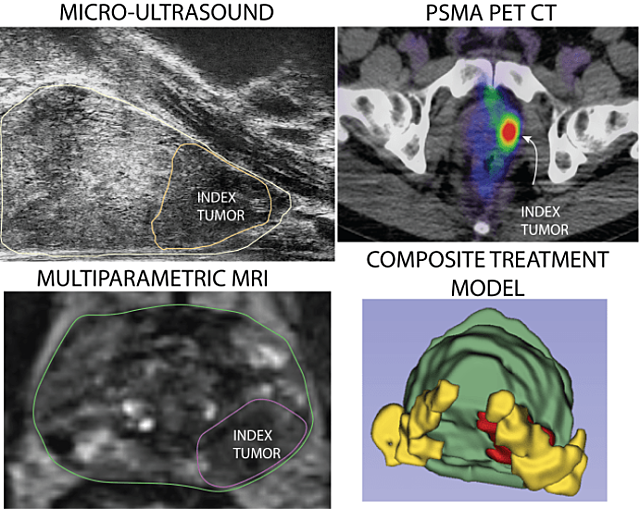
Patients considering focal therapy will also undergo a specialized prostate MRI called micro-ultrasound
The above images demonstrate a tumor imaged with 3 separate imaging modalities enabling us to carefully delineate the tumor margins prior to treatment.
What are the side effects of focal therapy?
In general, side effects of focal therapy are not as severe as with whole gland therapy (surgery and radiation). This is because nerves and muscles responsible for urinary continence and erectile function are avoided. An important consideration of focal treatment is that cancer control is not as good as whole gland therapy. However, prostate cancer can often grow slowly, allowing us to catch recurrences and intervene if needed.
How successful is focal therapy?
The need for additional treatment (such as radical prostatectomy or radiation therapy) is about 30% at seven years. Additional focal therapies may be used to ablate prostate cancer recurrences; however, this is not traditionally performed more than once prior to referring patients for whole gland therapy.
How is one followed after focal therapy?
Follow-up after focal therapy is important as some men will have a cancer recurrence. PSA is an unreliable marker, as the remaining non-ablated portion of the prostate continues to produce PSA . At the University of Florida, patients are followed with novel urinary biomarkers, imaging and biopsy 6-12 months following focal therapy to ensure successful treatment. Patients also obtain a surveillance biopsy 18-24 months after treatment to ensure no prostate cancer recurrence.
What happens if prostate cancer comes back?
As long as patients continue to be surveyed, the prostate cancer recurrences are found early and can be treated. Salvage treatment options include repeat focal therapy, surgery and radiation. While side effects are similar to those who have primary treatment, the extent of initial focal therapy, and baseline urinary and erectile function all influence outcomes.
Learn about UF Health urologic oncology and how our expert team of prostate cancer physicians can help you: Prostate Cancer | UF Health Urologic Cancer Center | Urologic Cancers | UF Health, University of Florida Health