Primary Biliary Cirrhosis
Definition
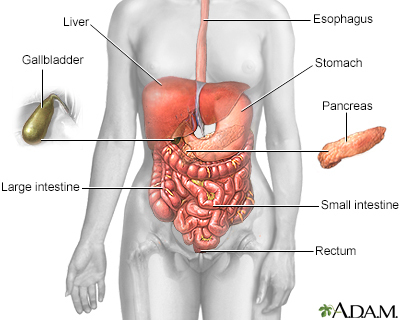
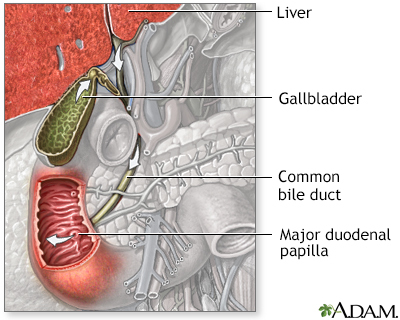
The bile ducts are tubes that move bile from the liver to the small intestine. Bile is a substance that helps with digestion. All of the bile ducts together are called the biliary tract.
When the bile ducts become swollen or inflamed, this blocks the flow of bile. These changes can lead to scarring of the liver called cirrhosis. This is called biliary cirrhosis. Advanced cirrhosis can lead to liver failure.
Alternative Names
Primary biliary cirrhosis (the old name for the disease); PBC
Causes
The cause of inflamed bile ducts in the liver of people with primary biliary cholangitis is not known. However, it is an autoimmune disorder which means your body's immune system mistakenly attacks healthy tissue. The disease may be linked to other autoimmune disorders such as:
- Celiac disease
- Raynaud phenomenon
- Sicca syndrome (dry eyes or mouth)
- Thyroid disease
The disease most often affects middle-aged women.
Symptoms
More than one half of people have no symptoms at the time of diagnosis. Symptoms most often begin slowly. Early symptoms may include:
- Nausea and belly pain
- Fatigue and loss of energy
- Fatty deposits under the skin
- Fatty stools
- Itching (pruritus)
- Poor appetite and weight loss
As liver function worsens, symptoms may include:
- Fluid buildup in the legs (edema) and in the abdomen (ascites)
- Yellow color in the skin, mucous membranes, or eyes (jaundice)
- Redness on the palms of the hands
- In men, impotence, shrinking of the testicles, and breast swelling
- Easy bruising and abnormal bleeding, most often from swollen veins in the digestive tract
- Confusion or problems thinking
- Pale or clay-colored stools
Exams and Tests
The health care provider will do a physical exam.
The following tests can check to see if your liver is working properly:
- Albumin blood test
- Liver function tests (serum alkaline phosphatase is most important)
- Prothrombin time (PT)
- Cholesterol and lipoprotein blood tests
Other tests that can help measure how severe liver disease may be include:
- Elevated immunoglobulin M level in the blood
- Liver biopsy
- Anti-mitochondrial antibodies (results are positive in about 95% of cases)
- Other antibody levels (especially if the anti-mitochondrial antibodies are negative)
- Special types of ultrasound or MRI that measure the amount of scar tissue (may be called elastography)
- Magnetic resonance cholangiopancreatography (MRCP)
Treatment
The goal of treatment is to ease symptoms and prevent complications.
Cholestyramine (or colestipol) may reduce the itching. Ursodeoxycholic acid (Urso) may improve removal of bile from the bloodstream. This may improve survival in some people. A newer medicine called obeticholic acid (Ocaliva) is also available. Obeticholic acid may be used in people who do not respond to Ursodeoxycholic acid. Other FDA-approved medicines are seladelpar (Livdelzi) and elafibranor (Iqirvo).
Vitamin replacement therapy restores vitamins A, K, E and D, which are lost in the fatty stools that may occur in people with primary biliary cholangitis. A calcium supplement or other bone medicines may be added to prevent or treat weak or soft bones.
Long-term monitoring and treatment of liver failure is needed.
Liver transplant may be successful if it is done before liver failure occurs.
Outlook (Prognosis)
The outcome can vary. If the condition is not treated, most people will die without a liver transplant. About one quarter of people who have had the disease for 10 years will have liver failure. Doctors can now use a statistical model to predict the best time to do the transplant. Other diseases, such as hypothyroidism and anemia, can also develop. DEXA scans for bone health are checked regularly. Serum alkaline phosphatase and bilirubin levels in response to treatment are used to help decide when a person might need a liver transplant.
Possible Complications
Progressive cirrhosis can lead to liver failure. Complications can include:
- Bleeding
- Damage to the brain (encephalopathy)
- Fluid and electrolyte imbalance
- Kidney failure
- Malabsorption
- Malnutrition
- Soft or weak bones (osteomalacia or osteoporosis)
- Ascites (fluid buildup in the abdominal cavity)
- Increased risk of liver cancer
When to Contact a Medical Professional
Contact your provider if you have:
- Abdominal swelling
- Blood in the stools
- Confusion
- Jaundice
- Itching of the skin that does not go away and is not related to other causes
- Vomiting blood
Gallery
References
Fogel EL, Sherman S. Diseases of the gallbladder and bile ducts. In: Goldman L, Cooney KA, eds. Goldman-Cecil Medicine. 27th ed. Philadelphia, PA: Elsevier; 2024:chap 141.
Garcia-Tsao G. Cirrhosis and its sequelae. In: Goldman L, Cooney KA, eds. Goldman-Cecil Medicine. 27th ed. Philadelphia, PA: Elsevier; 2024:chap 139.
Levy C, Bowlus CL. Primary biliary cholangitis. In: Chung RT, Rubin DT, Wilcox CM, eds. Sleisenger and Fordtran's Gastrointestinal and Liver Disease. 12th ed. Philadelphia, PA: Elsevier; 2026:chap 93.