Key takeaways

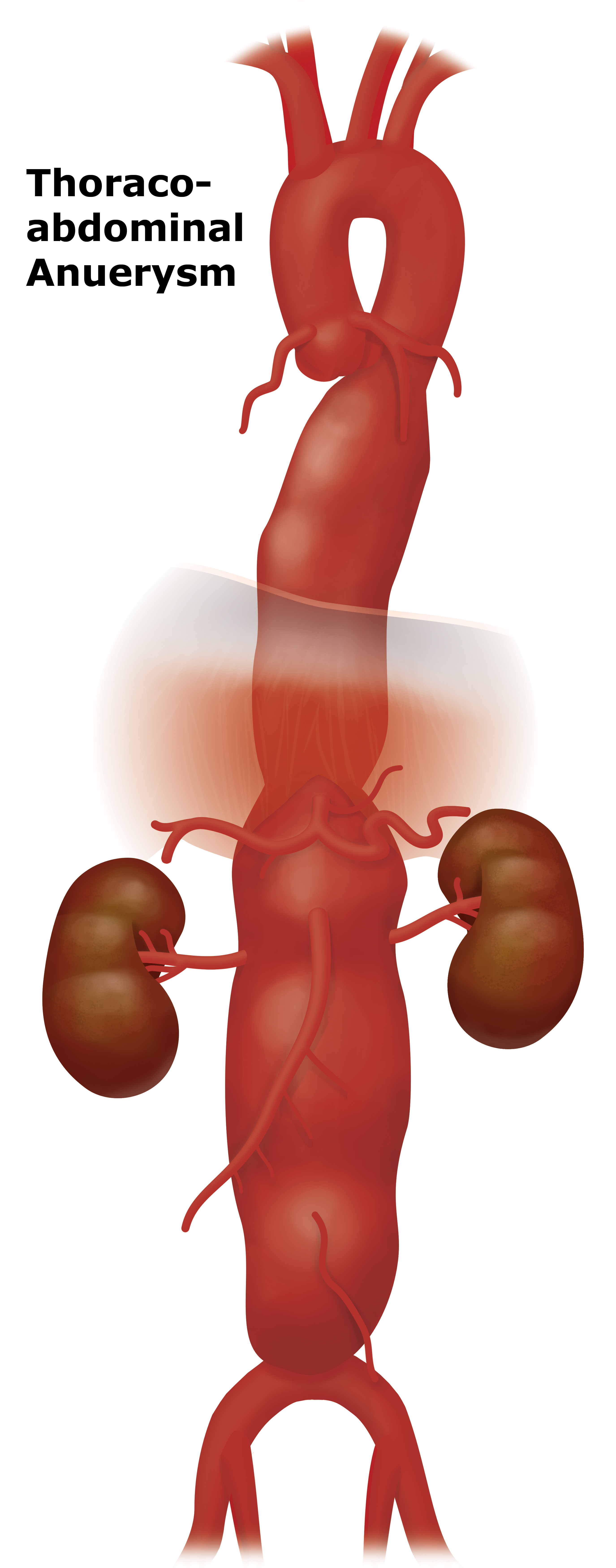
  • Definition: A thoracoabdominal aortic aneurysm (TAAA) is a dangerous, abnormal bulge in the aorta that spans across both the thoracic chest cavity and the abdomen.

  • Complexity: Because it involves the section of the aorta that supplies major organs such as the kidneys, liver, and intestines, TAAA is considered one of the most complex vascular conditions to treat.

  • Treatment: Surgical repair is typically recommended when a TAAAs reaches 5.5 cm in diameter, or if it is expanding rapidly, representing a high risk of rupture. The threshold for patients with connective tissue disorders is greater than or equal to 4.5 cm in diameter.

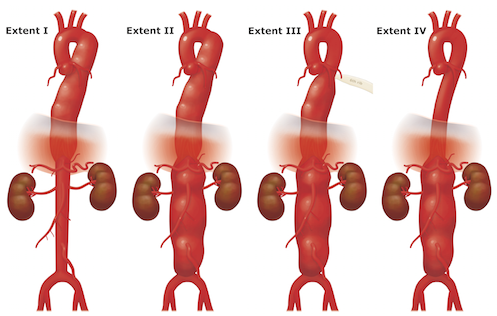
  • The Crawford Classification: Doctors categorize TAAAs into five types (Extent I through V) based on the exact length of the aorta involved and which branch arteries are affected.

  • Treatment Options: Management of a TAAA may include specialized medical therapy, traditional open-chest/abdominal surgery, hybrid procedures combining Thoracic Endovascular Aortic Repair (TEVAR) with open repair, and advanced, personalized fenestrated endovascular repairs/Physician-Modified Endograft (FEVAR/PMEG).

What is a thoracoabdominal aortic aneurysm?

The aorta is your body’s primary blood vessel, carrying oxygen-filled blood away from your heart to all your organs and limbs. A thoracoabdominal aortic aneurysm (TAAA) happens when a segment of this giant artery weakens and balloons outward. It then extends continuously from the chest down into the abdomen.

Because of its massive size and location, a TAAA is very dangerous. It sits directly on the stretch of the aorta where vital branch arteries split off to deliver blood to your stomach, liver, kidneys and intestines. If the aneurysm continues to grow, it can tear or completely burst, which can result in life-threatening internal bleeding.

The Crawford Classification

Vascular surgeons use a system called the Crawford Classification to group TAAAs into five categories. This classification helps your surgical team plan the safest approach based on how much of your body's blood pathway is involved:

  • Extent I: Involves most of the upper chest aorta and extends down into the upper abdomen.

  • Extent II: The most extensive type, spanning most of the chest aorta and the entire abdominal aorta.

  • Extent III: Involves the lower half of the chest aorta and most of the abdominal aorta.

  • Extent IV: Involves most or all of the abdominal aorta, reaching up to the lower edge of the chest.

  • Extent V: Involve

Illustration of variations of TAAA

Who does it affect?

One of the main causes of a thoracoabdominal aneurysm is atherosclerosis. This is the hardening and narrowing of the arteries due to long-term plaque buildup. As plaque builds up, it degrades the structural integrity of the artery wall. This causes that wall to stretch under the pressure of your heartbeat.

You are at a higher risk for developing a TAAA if you have any of the following risk factors:

  • Smoking: Tobacco use is the single largest factor in damaging artery walls and accelerating aneurysm growth.

  • High Blood Pressure (Hypertension): Constant high blood pressure weakens the lining of the aorta over time.

  • Age and Sex: TAAAs are much more prevalent in older adults and affect males more often than females.

  • Genetic Connective Tissue Disorders: Conditions like Marfan syndrome, Ehlers-Danlos syndrome and Loeys-Dietz syndrome cause inherently weak arterial tissue from birth.

  • Other Factors
    • High cholesterol

    • Diabetes

    • Being overweight

    • A family history of cardiovascular aneurysms

    • Past physical injury to the aorta

Symptoms to watch out for

Like other aneurysms, a TAAA can grow silently for years, with no warning signs. When symptoms do emerge, they are usually caused by the expanding bulge pressing against your spine, muscles or nearby organs.

Chronic symptoms may include:

  • A noticeable pulsing or throbbing sensation in your abdomen.

  • Continuous, deep pain in your abdomen, chest or lower back.

Symptoms of a ruptured aneurysm

If a TAAA tears or bursts, it is a catastrophic medical emergency. Call 911 immediately if you or someone else experiences:

  • Sudden, unbearable, ripping pain in the chest, back or stomach.

  • A rapid heart rate.

  • A severe, sudden drop in blood pressure.

  • Extreme dizziness, fainting or lightheadedness.

How is TAAA diagnosed?

Because they are often silent, many TAAAs are discovered entirely by accident when a patient gets imaging done for a different issue, such as back pain or a respiratory problem. To fully evaluate a suspected aneurysm, doctors rely on advanced imaging:

  • Computed Tomography (CT) Scan: The gold standard for TAAA mapping. It allows doctors to see the exact size, shape and Crawford classification of the bulge.

  • Magnetic Resonance Imaging (MRI): Provides highly detailed images of the blood vessel structures without using radiation.

Treatment options

At the UF Health Aortic Disease Center, a multidisciplinary team evaluates the size of your aneurysm, its Crawford classification, and your overall physical stamina to determine the safest and most effective course of care.

Medical management

If your aneurysm is small (under 5.5 cm) and you are free of symptoms, the risk of surgery may outweigh the benefits. Your doctor will choose "watchful waiting," which involves routine CT or MRI scans every 6 to 12 months to monitor for growth. You will also take medications to tightly control your blood pressure and cholesterol, and you must completely stop smoking.

Open surgical repair

An open repair for a TAAA is a highly complex operation that requires a skilled and fellowship-trained surgeon. The vascular or cardiothoracic surgeon makes an incision along the side of the chest and down into the abdomen to fully expose the diseased aorta. The ballooned section of the artery is removed and replaced with a durable synthetic tube, or graft. Because this surgery involves the arteries feeding your vital organs, the surgical team carefully detaches and sews those branch vessels directly into the new graft to preserve organ function.

Hybrid repair

For patients who may be too weak to withstand a fully open operation, a hybrid repair could be a highly effective alternative. It combines a minimally invasive TEVAR procedure with a smaller open surgery:

  1. The Chest Segment: A standard fabric-covered stent-graft (TEVAR) is fed through a small groin incision and expanded in the chest portion of the aneurysm.

  2. The Abdominal Segment: An open procedure is used to secure the remaining portion in the abdomen and safely protect the organ branch arteries. This reduces the overall trauma to the body compared to a massive open chest-and-abdomen incision.

Fenestrated endovascular aortic repair/physician-modified endograft (FEVAR/PMEG)

A total endovascular (minimally invasive) repair for a TAAA requires a highly specialized, custom-built device. Because standard stents would block the blood flow to your kidneys, liver, and stomach, FEVAR/PMEG uses a stent-graft that has custom-fit holes called fenestrations or tiny branching cuffs built into it. These holes line up perfectly with your organ arteries. The UF Health Aortic Disease Center is at the forefront of these advanced techniques, allowing eligible patients to have their entire thoracoabdominal aneurysm repaired through small incisions in the groin and arms.

Frequently asked questions

Why is a TAAA more complicated to fix than other aneurysms?

Most common aneurysms occur in the lower abdomen, safely below the arteries that feed your kidneys and digestive system. A TAAA crosses through the entire middle section of your body. Repairing it requires the cardiovascular surgeon to completely reconstruct the blood supply to your kidneys, liver, stomach and intestines while simultaneously maintaining blood flow to your spinal cord to prevent paralysis.

What is the recovery time after a TAAA surgery?

Because a TAAA repair is a major undertaking, recovery takes time. For an open or hybrid repair, you can expect to spend 7 to 14 days in the hospital, including a few days in the cardiovascular intensive care unit (CVICU). Full recovery at home to get back to your baseline energy levels typically takes 2 to 3 months. A total endovascular repair (FEVAR/PMEG) can shorten hospital stays significantly, often down to 3 to 5 days.

Can thoracoabdominal aortic aneurysms be cured with medication alone?

No. Medications can lower your blood pressure and heart rate, which reduces the physical stress on your aorta and slows down the rate of bulging. However, drugs cannot shrink an existing aneurysm or repair a permanently weakened artery wall. Surgery is the only definitive way to eliminate the risk of a rupture.

How often will I need scans if I am on a "watchful waiting" plan?

If your TAAA is stable and small, you will generally undergo a high-resolution CT scan or MRI every 6 to 12 months. If the scans reveal that your aorta is growing rapidly (more than 0.5 cm in a six-month period), your surgeon will likely move forward with a treatment plan even if the aneurysm has not yet hit the 5.5 cm threshold or the 4.5 cm threshold in patients with connective tissue disorders.

What is the difference between a TAA, an AAA, and a TAAA?

While all three conditions are dangerous bulges, or aneurysms, in the body's main artery that require vascular surgery, the difference comes down to one thing: location.

Your aorta starts at your heart, travels through your chest, passes through your diaphragm, and ends in your abdomen. Where the aneurysm forms will change how it is diagnosed, how dangerous it is and how surgeons fix it.

  • TAA (Thoracic Aortic Aneurysm): This bulge is located entirely in your chest, above your diaphragm. It can happen near your heart (ascending), in the curve at the top (arch), or descending down the back of your chest.

  • AAA (Abdominal Aortic Aneurysm): This bulge is located entirely in your abdomen, below your diaphragm. This is the most common type of aortic aneurysm and usually forms below the arteries that feed your kidneys.

  • TAAA (Thoracoabdominal Aortic Aneurysm): This is a massive, continuous bulge that spans both the chest and the belly, crossing right through the diaphragm. It is the most complex type because it sits on top of the critical branch arteries that deliver blood to your stomach, liver, kidneys and intestines.

Why choose the UF Health Aortic Disease Center?

The UF Health Aortic Disease Center is recognized as a premier, high-volume referral hub for thoracoabdominal aortic aneurysms. Because TAAA repairs require exceptional technical skills and specialized critical care, guidelines recommend that these procedures only be performed at major academic medical centers. Our specialized vascular and cardiothoracic surgeons work alongside dedicated cardiac anesthesiologists, advanced perfusionists and CVICU teams to deliver world-class survival and neurological safety outcomes for the most complex aortic cases.

To learn more about our comprehensive treatment programs or to request an expert consultation, please contact the UF Health Aortic Disease Center by calling (352) 273-5494.

This entry was written by Gabrielle Massari, Marketing Content Writer, and reviewed for accuracy by Eric Jeng, MD. Generative AI was leveraged as part of the content creation process.

Our experts

Independent doctors are not employed by UF Health, but may provide medical care at one of our locations.

Our locations